+1 250-855-2260
Contact us

Author: Paul Friend

  • Why Small Businesses Benefit from Monthly Marketing Support

    Why Small Businesses Benefit from Monthly Marketing Support

    For many small businesses, marketing does not stop because the owner does not care.

    It stops because the owner is busy.

    There are customers to serve, staff to support, quotes to send, invoices to chase, suppliers to manage, jobs to finish, and problems to solve. Marketing often becomes the thing that gets fitted in around everything else.

    That usually means it happens in bursts.

    A few social media posts go out when there is time. An email gets sent when there is something urgent to say. The website is updated when something feels out of date. The Google Business Profile gets attention when someone remembers.

    None of this is unusual. It is one of the most common marketing challenges small businesses face.

    The problem is that inconsistent marketing can make the business harder to find, harder to understand, and easier to forget.

    That is where monthly marketing support can help.

    Marketing often slips because there is no regular rhythm

    Most small business owners already know that marketing matters.

    They know they should probably be posting more consistently. They know their website could be clearer. They know their Google Business Profile should be kept active. They know emails can help them stay in touch with customers.

    Knowing this is not usually the issue.

    The issue is finding the time, deciding what matters most, and keeping the work moving when the day-to-day business gets busy.

    Without a regular process, marketing can quickly become reactive. Something gets posted because the business has gone quiet. An ad gets boosted because sales feel slow. A website page gets rewritten because someone noticed it looked old. An email goes out because there is a last-minute offer.

    Sometimes those actions are useful. But when marketing is always reactive, it can feel random.

    And random marketing is hard to measure, hard to improve, and hard to keep consistent.

    Doing more marketing is not always the answer

    When a business owner feels that marketing is not working, the first instinct is often to do more.

    More posts. More ads. More platforms. More offers. More content.

    But more activity is not always better.

    A small business does not need to be everywhere. It does not need to chase every trend. It does not need to copy what every competitor is doing.

    It needs marketing activity that supports the actual goals of the business.

    For one business, that might mean improving the website so potential customers better understand the service. For another, it might mean making the Google Business Profile more useful. For another, it could be staying in touch with past customers by email. For another, it may mean planning a simple campaign instead of posting without a clear purpose.

    The real question is not always, “What else can we do?”

    A better question is often:

    “What needs attention first?”

    That is where practical marketing support can make a difference.

    What monthly marketing support can help with

    Monthly marketing support gives the business a regular process for reviewing, planning, creating, and adjusting.

    It does not have to mean a large agency package. It does not have to mean hiring a full-time marketing employee. It does not have to mean handing over every decision.

    For many small businesses, monthly support is about having someone who can help keep the marketing organized, realistic, and moving in the right direction.

    Depending on the business, monthly support may include help with:

    • Marketing priorities and planning
    • Social media content
    • Google Business Profile updates
    • Email marketing
    • Website content and messaging
    • Local SEO guidance
    • PPC or boosted post review
    • Campaign planning
    • Monthly review and accountability

    The exact mix should depend on what the business needs most.

    A business that has an outdated website may need a different focus from a business that has a strong website but poor follow-up. A business with regular repeat customers may need more email marketing. A business that relies heavily on local search may need stronger Google Business Profile activity and clearer service pages.

    The value is not just in creating posts or emails.

    The value is in helping the business make better marketing decisions, stay more consistent, and use time and budget more sensibly.
    Why accountability matters

    Marketing is one of those areas that can easily slip to the bottom of the list.

    Not because it is unimportant, but because it rarely feels as urgent as the customer standing in front of you, the phone ringing, or the job that needs finishing today.

    A regular marketing check-in helps stop that from happening.

    Accountability means there is a process for looking at what has happened, what needs changing, and what should happen next.

    That might include asking:

    • What marketing activity happened this month?
    • What did not happen?
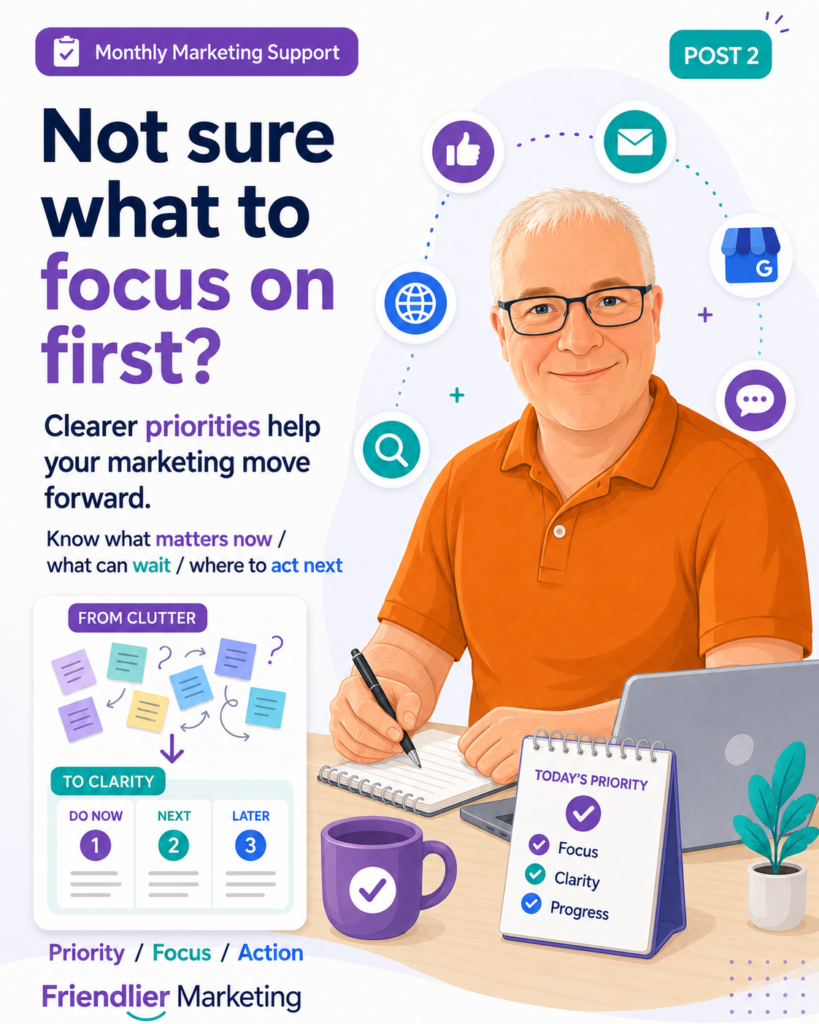
    • What needs attention now?
    • What can wait?
    • What is unclear to potential customers?
    • What needs to be updated?
    • What campaign or message should we focus on next?
    • Are we supporting visibility, credibility, and profitability?

    This kind of review does not need to be complicated. In fact, for most small businesses, it should not be.

    The goal is to create a practical rhythm:

    Review. Adjust. Plan. Act.

    When that rhythm is in place, marketing becomes less about panic and more about progress.

    Why monthly support can be more practical than hiring

    Hiring a full-time marketing employee is not realistic for every small business.

    For some businesses, it may not be affordable. For others, there may not be enough work to justify the role. Some owners may also not want the added responsibility of managing another employee, especially if they are not sure what marketing tasks should be prioritized in the first place.

    Monthly support can be a more practical middle ground.

    It gives the business access to marketing advice, planning, content support, and accountability without immediately committing to a full-time hire.

    This can be especially useful for businesses that need consistent help but still want to stay closely involved in decisions.

    The business owner still brings the industry knowledge. They know the customers, the service, the team, the pricing, and the day-to-day realities of the business.

    The marketing support helps turn that knowledge into clearer messaging, more consistent activity, and better follow-through.

    What monthly marketing support does not do

    It is important to be honest about this.

    Monthly marketing support does not guarantee sales, leads, rankings, reviews, or profit.

    No marketing consultant should promise that.

    There are too many factors involved, including the offer, pricing, competition, customer service, follow-up, market conditions, reputation, capacity, and the quality of the product or service being promoted.

    Marketing can support the business. It can improve consistency. It can make the business easier to understand. It can help build visibility and credibility over time. It can give campaigns a stronger foundation.

    But the business still needs to answer enquiries, deliver well, follow up properly, honour its promises, and make sound decisions.

    Good marketing support should not pretend otherwise.

    Signs your business may benefit from monthly marketing support

    Monthly support may be worth considering if:

    • Your marketing happens in bursts, then stops
    • You are not sure what to prioritize
    • Your website, social media, email, and Google Business Profile feel disconnected
    • You keep meaning to send emails but rarely do
    • You post on social media only when you remember
    • You are spending money on ads without being sure the message or landing page is strong enough
    • You have lots of ideas but no clear plan
    • You want honest advice, not marketing jargon
    • You need someone to help you stay accountable

    These are common problems for small businesses.

    They are also fixable with a better process.

    A simple monthly marketing rhythm

    A useful monthly rhythm does not need to be complicated.

    It could look like this:

    1. Review

    Look at what happened last month. What went out? What was missed? What worked well? What needs attention?

    2. Adjust

    Update the plan based on what is happening in the business. Has the priority changed? Is there a seasonal opportunity? Is there a service that needs more visibility?

    3. Plan

    Decide what content, email, website updates, Google Business Profile activity, or campaign work should happen next.

    4. Act

    Create, schedule, publish, update, test, and follow through.

    That rhythm is simple, but it can make a big difference because it gives marketing a place in the calendar rather than leaving it to chance.

    The aim is better consistency, not more noise

    Small business marketing does not need to be loud, complicated, or constant.

    It needs to be clear, useful, and consistent enough that people can understand what you do, why it matters, and how to take the next step.

    Monthly support helps create that consistency.

    It gives the business a practical way to keep moving, even when the owner is busy.

    And for many small businesses, that is the real value: not just more marketing, but better-organized marketing that supports the business.

    Need help keeping your marketing moving?

    Friendlier Marketing provides practical monthly marketing support for small businesses in Nanaimo and Vancouver Island.

    Support can include planning, content, social media, email marketing, Google Business Profile activity, SEO guidance, PPC review, campaign planning, and accountability.

    The goal is simple: clearer priorities, more consistent marketing activity, and practical support that helps you keep moving.

    Learn more about Monthly Marketing Support or contact Friendlier Marketing to ask what this could look like for your business.

    Paul Friend
    Friendlier Marketing

  • Hoedown Excavating Old Skool

    Hoedown Old Skool
    EXCAVATING ARCADE
    1UP
    000000
    FUEL

    🚜
    ⛽

    PRESS START
  • Support Our BNI Nanaimo Members in CommunityVotes Nanaimo 2026

    Support Our BNI Nanaimo Members in CommunityVotes Nanaimo 2026

    BNI is built on supporting each other. This page has been created to make it easier for members, clients, friends, and local supporters to nominate BNI Nanaimo businesses in CommunityVotes Nanaimo 2026.

    BNI Nanaimo CommunityVotes

    Support Hub

    Let’s support each other and help our fellow BNI Nanaimo members get the recognition they deserve.

    How it works:
    1. Click the button for the business you want to support.
    2. Search for the business name if needed.
    3. Submit your nomination.
    4. Share this page with others.

    BNI Nanaimo Members

    Click the category button that best matches the business to cast your nomination.

    Tidal CPA Inc.

    Member: Adrien Stewart

    Category: Accountants

    Nominate / Support →

    Ardent Properties Inc.

    Member: Alex Zhou

    Category: Property Management

    Nominate / Support →

    Lendlab Mortgage Inc.

    Member: Balraj Maan

    Category: Mortgages and Brokers

    Nominate / Support →

    Phoenix Siding Inc.

    Member: Blake Labonte

    Category: Siding and Soffits

    Nominate / Support →

    Brenda Redman Notary Corporation

    Member: Brenda Redman

    Category: Real Estate Law and Lawyers

    Nominate / Support →

    Calais Leisurescapes

    Member: Brian Schick

    Category: Pool Service

    Nominate / Support →

    STOR-X Organizing Systems Nanaimo

    Member: Carrie Lunn

    Category: Cabinets and Cabinet Makers

    Nominate / Support →

    Bedrock Advising

    Member: Charles Knox

    Category: Professional Coaching

    Nominate / Support →

    Better Life Protocols

    Member: Chris Backus

    Category: Holistic Wellness

    Nominate / Support →

    True North Pressure Washing

    Member: Chris Wolfe

    Category: Window Cleaning

    Nominate / Support →

    Cory Chapman Personal Real Estate Corp.

    Member: Cory Chapman

    Category: Real Estate Agents

    Nominate / Support →

    Principle Business Solutions Limited

    Member: Doedy Reisler

    Category: Bookkeeping

    Nominate / Support →

    Truvue Inspections

    Member: Elizabeth Maybury

    Category: House Inspection

    Nominate / Support →

    William Wright Commercial

    Member: Evan Richardson

    Category: Real Estate Brokers

    Nominate / Support →

    Heidi Joy Island Real Estate, eXp Realty

    Member: Heidi Evans

    Category: Real Estate Agents

    Nominate / Support →

    High Tide Plumbing & Gas Ltd

    Member: Jordan Barnes

    Category: Plumbers and Plumbing

    Nominate / Support →

    Shining Knight Construction

    Member: Josh Knight

    Category: General Contractors

    Nominate / Support →

    Walls Electrical

    Member: Kyle Potter

    Category: Electrician

    Nominate / Support →

    Budget Blinds

    Member: Michelle Norris

    Category: Blinds and Window Coverings

    Nominate / Support →

    Tame and Tidy Professional Organizers

    Member: Michelle McRae

    Category: Organization Services

    Nominate / Support →

    Wild and Bloom Photography

    Member: Moriah Bagg

    Category: Photographers

    Nominate / Support →

    BDC

    Member: Nadine Shemilt

    Category: Loans

    Nominate / Support →

    Sturdy Home Repair

    Member: Noah Sturdy

    Category: Carpentry & Woodworking

    Nominate / Support →

    Friendlier Marketing

    Member: Paul Friend

    Category: Marketing and Advertisement

    Nominate / Support →

    Blue Flame Ventures

    Member: Rebecca Robichaud

    Category: Heating and Cooling

    Nominate / Support →

    UB Wealth Management Inc.

    Member: Sarah Dion

    Category: Financial Advisors

    Nominate / Support →

    United Floors

    Member: Tania Oleshak

    Category: Carpets and Rugs

    Nominate / Support →

    Mach 1 Painting

    Member: TJ Auger

    Category: Painting

    Nominate / Support →

    Hub International

    Member: Tracey Lassam

    Category: Insurance Agents and Brokers

    Nominate / Support →

    Print Three

    Member: Tricia Potter

    Category: Printers

    Nominate / Support →

    Ashley Travel

    Member: Viccie Ashley

    Category: Travel Agencies

    Nominate / Support →

    Thank you for supporting BNI Nanaimo members.
    If you notice a missing business, incorrect category, or better nomination link, please let us know so this support hub can be updated.
  • What is the difference between Tartan and Plaid.

    What is the difference between Tartan and Plaid.

    The terms “plaid” and “tartan” are often used interchangeably, but they have distinct meanings rooted in history, culture, and geography. Understanding the difference between the two requires exploring their origins, usage, and cultural significance, particularly in the context of Scottish heritage. This discussion will also consider how these patterns have evolved over time and how they are perceived and used in contemporary contexts.

    Definitions and Origins

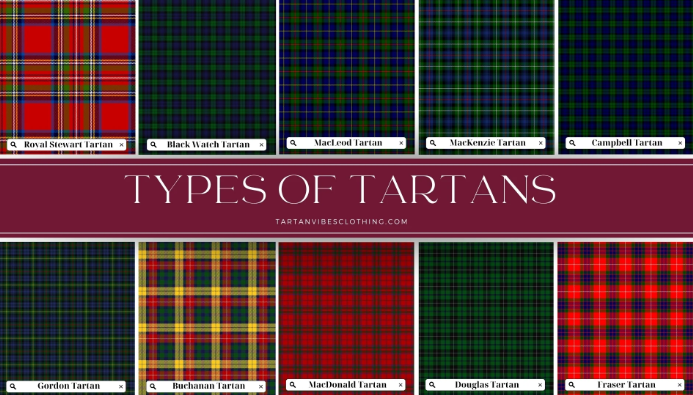
    Tartan refers specifically to a pattern of crisscrossed horizontal and vertical bands in multiple colors, woven into cloth. Traditionally associated with Scotland, tartans are created by weaving colored threads in a warp and weft pattern, producing distinctive checks. Each tartan design, known as a “sett,” is unique and often carries symbolic significance, representing specific clans, families, regions, or institutions. Tartans are registered and cataloged in various tartan registries, with the Scottish Register of Tartans being the most notable modern repository.

    Plaid, on the other hand, originates from the Gaelic word “plaide,” which means blanket. Historically, in Scotland, a plaid was a large piece of fabric, often tartan-patterned, worn as a cloak or draped over the shoulder. The Great Plaid (or “Feileadh Mòr” in Gaelic) was a long, versatile garment that could be used as both clothing and bedding. Over time, especially in North America, “plaid” came to refer to any fabric or garment with a checked pattern, regardless of whether it was authentically tartan.

    Historical Context

    Tartan in Scottish History

    Tartan’s history is deeply intertwined with Scotland’s cultural and political identity. Archaeological evidence suggests that checked patterns were used in textiles as early as the Bronze Age, though these early examples were not associated with clans. The earliest known tartan in Scotland, the “Falkirk Tartan,” dates to the 3rd century AD. This simple pattern of natural and brown wool was discovered in a Roman-era site and provides evidence of woven checked fabrics in early Scottish society.

    By the 16th and 17th centuries, tartan had become a significant part of Highland dress. Specific patterns began to be associated with certain regions or groups, but it wasn’t until the 18th century that tartan became closely linked with Scottish clans. This association was formalized during the rise of tartan’s popularity in Highland regiments, where tartan kilts became a key part of military uniforms.

    The Jacobite uprisings of the 18th century further solidified tartan’s cultural symbolism. After the Battle of Culloden in 1746, the British government passed the Dress Act, which banned the wearing of tartan and other traditional Highland attire in an attempt to suppress Highland culture and prevent rebellion. This prohibition lasted until 1782, after which tartan experienced a resurgence, fueled by romanticized notions of Scottish identity.

    The 19th century saw a tartan revival, popularized by King George IV’s visit to Scotland in 1822 and Queen Victoria’s fondness for Balmoral Castle. During this period, tartans were systematically cataloged and associated with specific clans, solidifying the modern concept of tartan as a marker of heritage and lineage.

    Plaid in Historical Use

    While tartan has a clear Scottish origin, “plaid” originally referred to the garment rather than the pattern. In Highland Scotland, a plaid was a practical piece of clothing, serving as a shawl or blanket to protect against the harsh climate. The Great Plaid, a precursor to the modern kilt, was a large length of tartan fabric that could be pleated and belted around the waist while the rest was draped over the shoulder.

    When Scottish emigrants brought their traditions to North America, the term “plaid” began to evolve. English-speaking settlers used “plaid” to describe the patterns they associated with Scottish textiles. Over time, in North American English, “plaid” became synonymous with any checked or tartan-like pattern, regardless of its cultural origins.

    Cultural Significance

    Tartan as a Symbol of Identity

    Tartan’s role in Scottish identity is unparalleled. Each tartan design can represent a clan, family, or region, creating a tangible link to ancestry and heritage. Clan tartans, though largely a 19th-century invention, are now deeply ingrained in Scottish culture. Tartan is also used by institutions, military units, and even corporations, further broadening its symbolic reach.

    In modern times, tartan is celebrated during events such as Tartan Day, observed annually on April 6 to honor Scottish heritage. The use of tartan in formal Scottish attire, such as kilts and sashes, continues to be a powerful expression of cultural pride.

    Plaid in Global Fashion

    Plaid, as it is understood outside Scotland, has a more universal and less culturally specific connotation. It has become a staple in global fashion, often associated with casual or rustic styles. The versatility of plaid patterns has made them popular in garments ranging from flannel shirts to scarves and skirts. Plaid patterns can be found in textiles worldwide, with variations influenced by local weaving traditions.

    The adoption of plaid by various subcultures, such as grunge in the 1990s, has further cemented its place in contemporary fashion. Unlike tartan, plaid lacks the strict rules and associations of heritage, making it a more flexible and accessible design element.

    Key Differences

    1. Cultural and Historical Roots:
      • Tartan is inherently Scottish, tied to clans, regions, and national identity.
      • Plaid, while originally Scottish, has evolved into a general term for checked patterns in North American and global usage.
    2. Symbolism:
      • Tartan carries deep symbolic meaning, often representing lineage and heritage.
      • Plaid is primarily a decorative pattern with no intrinsic cultural associations.
    3. Formal Recognition:
      • Tartan designs are often registered and cataloged, with specific rules governing their use.
      • Plaid patterns are not subject to such formalities and are freely created and adapted.
    4. Usage in Clothing:
      • Tartan is traditionally used in kilts, sashes, and other formal Scottish attire.
      • Plaid is more commonly seen in everyday wear, such as flannel shirts and blankets.

    Modern Interpretations

    In contemporary design and fashion, the distinction between tartan and plaid is often blurred. High-end designers and fast-fashion brands alike incorporate tartan-inspired patterns into their collections, sometimes without regard to their cultural significance. This appropriation has sparked discussions about the importance of respecting the origins and meanings of traditional designs.

    Despite this, tartan remains a proud symbol of Scottish heritage, celebrated at events like Highland Games and worn during special occasions. Plaid, meanwhile, continues to enjoy widespread popularity as a versatile and timeless pattern.

    Conclusion

    The difference between plaid and tartan lies in their origins, meanings, and cultural significance. Tartan, with its roots in Scottish history, represents a unique and powerful symbol of identity, heritage, and tradition. Plaid, while initially connected to Scottish garments, has evolved into a more general term for checked patterns in the global lexicon. Understanding these distinctions not only honors the cultural legacy of tartan but also highlights the ways in which patterns and textiles can transcend their origins to become part of a shared global aesthetic. By respecting and appreciating these differences, we can celebrate the rich history and versatility of both tartan and plaid in modern society.

  • Phoenix Siding

    Phoenix Siding

    Blake originally came to us for a digital marketing audit, to help identify areas that could be improved.

    We completed the marketing audit and discussed with Blake the findings and recommendations.

    After Blake had time to digest the Marketing report, he instructed Friendlier Marketing to undertake all of the findings.

    The main areas of interest were refreshing the Phoenix Siding website, improving their presence on social media, and providing on-going marketing coaching and consulting.

  • Staff Evaluation and Appraisals

    Staff Evaluation and Appraisals

    Here at Friendlier Organics, we believe in the principles of marketing and all that it stands for. When considering marketing, we often reference the 4 Ps of marketing of which People is one of them.

    The following article is adapted from an Indeed article with our views on the importance of People to the success of your business. Without the right people for your business no amount of promotional marketing will offset the wrong people.

    Why do we measure employees’ performance? Why do we measure our business performance? To identify what we are doing well and what needs improvement. Besides real estate, your employees are one of your biggest assets and resource. You want to know they are working well for your company. If you have employees then you would benefit from a recruitment strategy, this strategy will include elements post hiring.

    Therefore measuring your employees’ performance is an essential tool to evaluate success and encourage improvement. A tool employers use is an evaluation/appraisal form, which they may refer to during an employee evaluation or performance review. Read on to learn what you should include in your employee appraisal forms and how to implement them with your team. We have included a few simple free templates for you to use. If you are uncomfortable carrying out performance reviews then please out for assistance. 

    What is an appraisal form?

    An appraisal form is a document that business owners, managers, and human resources staff use evaluate and track the performance of employees. The form should include goals, that are SMART and they often include ratings and room for comments on performance (both good and bad), this allows both parties to monitor progress and identify any trends. On an appraisal form, the employee’s direct supervisor keeps track of the employee’s achievements and contributions during a specific period. They also indicate the employees’ areas of strength and weakness. Resulting in a joint action plan to move forward. 

    Managers often use the performance appraisal form to guide them through an employee’s performance review by highlighting specific items to discuss. When going through the appraisal form, both the employee and manager can work together to create goals for the employee. It is important to note that the whole evaluation process is a win-win environment and not an excuse to browbeat employees. Any matters that may require disciplinary action should be carried out separately via the company’s disciplinary procedure. 

    How to create an appraisal form

    A well-made performance appraisal form might be a very simple document, it helps both you and the employee understand what the employee is doing well and how they can improve. Include relevant appraisal factors that break down the evaluation by different skills, knowledge, and qualities. Customize the form to fit your company’s goals and the metrics you want to track for your employees. 

    Here are some areas to consider when creating an appraisal form:
     

    1. A rating rubric

    Personally, I believe that all evaluations should include a measure to gain quantitative data. Think of the key objectives of an employee’s role and separate them into different categories. Then, rate how well they’re meeting each objective. A common rating system is the 5-point rating scale. Detail what each rating means to help managers in different departments rate employees consistently. Here’s an example of what each number signifies in this type of rating scale:

    • 1 = Poor (consistently fails to meet expectations)
    • 2 = Fair (frequently fails to meet expectations) 
    • 3 = Good (usually meets expectations)
    • 4 = Very Good (frequently surpasses expectations)
    • 5 = Excellent (consistently surpasses expectations)

    2. The employee’s achievements

    Most employers fill out a new appraisal form for each performance review. Highlight the employee’s greatest achievements during the review period. Include what projects the employee successfully completed or what they did well.

    3. What the employee can improve on

    Think about what areas the employee could improve on. For instance, an employee might not communicate well with the team or they might show up late frequently, hurting their productivity.

    4. Improvements since the last review

    If the employee has already had a performance review, note the things they have or haven’t improved since your last meeting. Detail what actions they took to meet their previous goals. By reflecting on what worked for them, they can use this insight for their new goals.

    5. The employee’s professional goals

    Help the employee create new professional goals for this next review period. Choose SMART (Specific, Measurable, Attainable, Relevant, Time-bound) goals so the employee is more likely to accomplish this goal in a set timeframe.

    6. Comments from the employee

    The employee comments section lets employees explain themselves in writing. Here they can include why their work isn’t meeting company standards, or they could express what they enjoy about their position.

    Performance appraisal template

    An appraisal form should help you thoroughly evaluate your employees. It’s a useful tool to keep track of their efforts and achievements. Feel free to copy and paste this into a word document.

    Here is a performance appraisal template you can use:

    Employee’s name:
    Position:
    Department:
    Supervisor’s name:
    Review period:
    Date of performance review:
     

    [Objective 1]: [rating]
     

    [Objective 2]: [rating]
     

    [Objective 3]: [rating]
     

    [Objective 4]: [rating]
     

    [Objective 5]: [rating]
     

    Overall rating: [number]/25
     

    Achievements:
     

    Areas of improvement:
     

    Actions the employee took to improve from their previous review:
     

    Professional goals:
     

    Employee’s comments:
     

    Appraisal form example

    Fully complete an employee’s appraisal form so they can learn how they’re doing in each aspect of their job.

    Here is an example to get you started:

    Employee’s name: Lisa Nelson
    Position: Marketing specialist
    Department: Marketing
    Supervisor’s name: Jorge Diaz
    Review period: 7/1/19-1/1/20
    Date of performance review: 1/12/20
     

    Collaboration: 4
    Lisa participated actively in the team meetings for the latest marketing campaign. She collaborated well with the graphic designer on the campaign to ensure the graphics matched the campaign goals.
     

    Work ethic: 5
    Lisa has thrown herself into her new position and is putting in the effort to understand and excel at her new responsibilities.
     

    Problem-solving: 3
    Because she’s new in the position, Lisa tends to go to her supervisor immediately when she faces a problem. She’s slowly gaining more confidence in herself and learning how to work through problems when they arise.
     

    Decision making: 5
    Lisa shows good judgment when developing marketing materials. She consistently uses market research on customer trends to make decisions about marketing campaigns.
     

    Organization: 4
    Lisa usually arrives on time and is ready to start work immediately. On the two days she arrived late during this review period, she worked late to work her full shift. Her organizational skills allow her to work efficiently on her marketing campaigns.
     

    Overall rating: 21/25
     

    Achievements: During her review period, Lisa was promoted from marketing associate to marketing specialist. In this new role, she is working hard to prove that she is ready for more responsibilities. 
     

    Areas of improvement: Lisa could improve on trying to solve problems before seeking assistance.
     

    Actions the employee took to improve from their previous review: Her previous goal was to come to work on time more consistently. Lisa made great strides in achieving this goal. When she comes in late occasionally, she is sure to stay late to make up her time.
     

    Professional goals: During our review, Lisa expressed that she wants to be confident in her new role. She’s working toward this goal by trying to rely on herself to solve more problems. 
     

    Employee’s comments: This has been a busy review period for me. Now that I know my strengths and weaknesses, I look forward to working toward my new goals. 
     

    Frequently asked questions about appraisal forms

    Appraisal forms are a great way for employers can keep track of their employees’ performance and have documented open communication. The key is to make sure you’re consistently filling the form out with impactful appraisal comments so you can accurately rate your employees.

    Here are common questions employers ask about appraisal forms:

    Can employees have an appraisal form to fill out?

    Before your employee’s performance review, give them a self-evaluation form (with a how-to guide) to complete that has them identify their strengths and areas for improvement. This can help them reflect on their efforts and gives you or their manager a good idea of how the employee thinks they’re doing. This also helps you compare how you see them performing with their own point of view, which is often very different. You may find that inherent human nature takes over and they focus more on the negative.

    Why are appraisal forms important?

    They’re important because it helps the employer create an objective evaluation of an employee. When team members receive regular feedback, they can focus their attention on areas they need to improve and feel motivated by learning their strengths. It also protects the business should a relationship turn sour and requires parting ways. You have documented that journey.

    Should employers get appraisal forms?

    To learn how you’re doing as an employer, you could have your staff fill out an appraisal form to evaluate you. Employees may appreciate that you’re putting in the effort to be a better leader. Remember to put your ego to one side, and do not start a witch hunt.

    What is the best appraisal method?

    The best appraisal method can vary based on the industry, your evaluation goals, and your preferences. Using a numerical ranking system helps you quantify performance and make easy comparisons from one evaluation to the next. Combining the rankings with written statements and specific examples gives a well-rounded picture of the employee’s performance. A good balance between quantitative and qualitative data is ideal. Remember the appraisal methods needs to be a win-win for both employer and employee as it is a tool for both to grow.

    What is the difference between a performance appraisal and a performance evaluation?

    The terms performance appraisal and performance evaluation are often used interchangeably. They both describe the process of reviewing an employee’s work. A performance review is another common term used to describe the evaluation process. Your company can determine how often to conduct evaluations using the performance appraisal forms and how to implement them.

    How often should an evaluation be carried out?
    This depends on numerous factors, like the length of employment, is the company going through a pivot, has the employee recently taken on a new role. etc.

    To Summarize The Benefits of Using a Performance Evaluation Form

    • It can be used in measuring the overall performance of your employees.
    • It helps in identifying different areas of commendation and those that need remediation.
    • It makes it easy for an employer to rate his or her employees, dependent on their total percentage score.
    • Performance evaluation offers both positive and negative feedback, which the employee can use in improving his or her work skills.
    • Motivates employees, when supported by proper merit-based compensation systems.
    • It provides a structured process on how to approach the management when you want to identify problems and clarify the expectations and plans.
    • The collected detail can be used to measure and monitor the success of your business and the induction practices.
    • It makes it possible to identify under-performers and decide whether to keep them with hopes of improvement or let them go.
    • It makes it easy for record-keeping where you can review any changes at any time in the future.
    • The performance form has an important role, especially when deciding who to promote, reward, or transfer.

    Useful templates to download for free.

    New Employee Performance Review Form

    Employee Evaluation Form

    Basic Staff Evaluation Form

  • The Basics of Brand Positioning for Small Businesses

    The Basics of Brand Positioning for Small Businesses

    The Basics of Brand Positioning for Small Businesses

    For a new business owner, the world of marketing might seem daunting. Terms like ‘brand positioning’ could feel distant, reserved for big corporations with deep pockets. But in reality, brand positioning is equally, if not more, crucial for small businesses. Let’s break down this essential concept and discuss its significance.

    What is Brand Positioning?

    Brand positioning refers to the unique space your brand occupies in the minds of your customers. It’s how you differentiate your product or service from that of your competitors. Think about it: in a world flooded with options, why should someone choose you? The answer lies in effective brand positioning.

    The Components of Brand Positioning

    1. Target Audience: Understanding who you’re speaking to is fundamental. Your audience defines how you communicate. Are they millennials looking for sustainable solutions? Or retirees seeking reliability and simplicity?
    2. Unique Selling Proposition (USP): What makes your product or service stand out? It might be the quality, the price, the way it’s made, or something entirely unique.
    3. Brand Promise: This is the value or experience customers can expect every time they interact with your business.
    4. Brand Personality: If your brand were a person, what would they be like? Are they sophisticated and premium or fun and playful?
    5. Value Proposition: This goes beyond the features of your product. It’s about the benefits – the real, tangible value customers receive.

    Why is Brand Positioning Essential for Small Businesses?

    1. Clarifies Your Business Identity: Brand positioning solidifies your identity. You understand your strengths and the unique space you occupy in the market. This clarity streamlines other aspects of your business, from product development to customer service.
    2. Facilitates Targeted Marketing: Knowing your positioning aids in targeted advertising. You know whom to target, where they hang out, and what messaging resonates with them. This means efficient use of marketing dollars, which is crucial for small businesses.
    3. Sets You Apart From Competitors: The marketplace is crowded. Through brand positioning, you can highlight what makes you different (and better) than the alternatives.
    4. Creates Emotional Connections: Businesses that stand for something – that have a unique voice and position – tend to create more profound emotional connections with customers. These connections can foster loyalty and lead to repeat business.

    The Positives of Undertaking a Branding Positioning Exercise

    1. Focused Strategy: Instead of trying to be everything to everyone, you’ll have a clear roadmap. Your strategies, whether they are for product development, marketing, or sales, will be aligned with your brand’s core position.
    2. Increased Customer Loyalty: Customers resonate with brands they can relate to. When you position your brand correctly, you become more than just a business; you become a part of your customers’ lives.
    3. Optimal Resource Allocation: Small businesses often work with limited resources. A well-defined brand position ensures that you’re not wasting time and money on efforts that don’t align with your core brand message.
    4. Higher Perceived Value: Effective brand positioning can allow you to charge a premium. When customers perceive added value in your brand, they’re often willing to pay more.
    5. Cultivates Brand Ambassadors: A strong, unique brand positioning can lead to passionate customers who become brand advocates, voluntarily promoting and vouching for your business.

    In conclusion, brand positioning isn’t a luxury reserved for big corporations. It’s an essential tool in the small business owner’s toolkit. By understanding and leveraging your unique position in the market, you can ensure your business not only survives but thrives in today’s competitive landscape. Embrace the process of defining your brand’s position; the rewards are well worth the effort!

    Still unsure if you can successfully carry out your own brand positioning exercise, read this 8-Step Process to Undertake a Branding Positioning Exercise. If then still unsure reach out for support.

  • 20 Questions to Ask When Designing or Developing a Website

    20 Questions to Ask When Designing or Developing a Website

    Creating a website requires a deep understanding of the user’s objectives, goals, and requirements. Whether you’re redesigning an existing site or starting from scratch, here are 20 crucial questions to guide you.

    Objectives and Goals
    Before diving into specific questions, it’s essential to understand the broader objectives and goals behind creating or redesigning a website. These include:

    1. Identifying the Target Audience: Who are you trying to reach?
    2. Clarifying the Main Objective: What primary action do you want visitors to take?
    3. Measuring Success: How will you determine if your website is successful?
      If you would like some additional website goals for a small business.

    20 Questions to Ask When Designing or Developing a Website

    1. Purpose: What’s the primary purpose of the website?
      Why: The core reason for creating the website determines every subsequent decision. Knowing if it’s e-commerce, informational, or a personal blog changes design choices, functionalities, and user experience.
    2. Audience: Who are your target users?
      Why: A website should be tailored to its audience. Understanding the demographics and interests of potential visitors ensures content and design appeal directly to them, increasing engagement and conversion rates.
    3. Content: What kind of content will your site feature?
      Why: Different content types (text, video, images) require different design and functional elements. It also affects website speed, storage needs, and user interactions.
    4. Design Preferences: Are there existing websites or specific design elements you’d like to incorporate?
      Why: Having a clear idea or reference helps designers understand aesthetic preferences, saving time and ensuring client satisfaction.
    5. Branding: Do you have existing brand guidelines or colors?
      Why: Brand consistency across all platforms enhances recognition and trust. Adhering to existing guidelines ensures the website aligns with other brand materials.
    6. Functionality: Are there specific functionalities you need?
      Why: Website functionality should align with its purpose. An e-commerce site will need shopping cart functions, while a portfolio might need a gallery.
    7. Mobile: How important is mobile optimization?
      Why: With a significant portion of users accessing websites via mobile devices, ensuring a site is mobile-friendly can vastly affect user experience and search rankings.
    8. SEO: How important is search engine optimization?
      Why: SEO ensures the website can be found easily on search engines, driving organic traffic. Knowing its importance can affect content, structure, and backend development.
    9. Integration: Do you need your site to integrate with other tools?
      Why: Some businesses rely heavily on CRM tools, email marketing, or other third-party platforms. Seamless integration can automate processes and enhance user experience.
    10. Maintenance: Who will maintain the website after launch?
      Why: Websites require regular updates and maintenance. Knowing who’s responsible post-launch ensures continuity and long-term functionality.
    11. Scalability: Do you anticipate scaling up in the future?
      Why: If there’s potential for business or content growth, the site’s infrastructure should be built to accommodate that, ensuring longevity and cost-efficiency.
    12. Timeline: By when do you need the website completed?
      Why: Setting clear deadlines helps in project management, and allocation of resources, and ensures the project stays on track.
    13. Budget: What is your budget?
      Why: Budget dictates many factors, from design complexity to functionalities. Being clear upfront helps in setting realistic expectations.
    14. Accessibility: Is accessibility important?
      Why: Ensuring a site is accessible to all, including those with disabilities, is not only ethical but can also be a legal requirement in many places.
    15. Conversion: What actions do you want users to take?
      Why: Knowing desired user actions (like sign-ups or purchases) allows for optimization of design and functionalities to drive those specific actions.
    16. Feedback: How will you gather user feedback?
      Why: Feedback is invaluable for ongoing improvement. Planning for feedback collection ensures the website remains user-centric.
    17. Hosting and Domain: Do you have a domain and hosting provider?
      Why: This affects website speed, security, and other technical aspects. Knowing this upfront can influence development choices.
    18. Security: Are there specific security concerns?
      Why: Especially critical for sites handling sensitive information. Ensuring robust security protocols protects both the business and its users.
    19. Analytics: How will you track website performance?
      Why: Analytics provide insights into user behavior, site performance, and areas of improvement. Setting this up from the start ensures data-driven decision-making.
    20. Communication: How often would you like updates?
      Why: Regular communication ensures everyone’s on the same page, reduces misunderstandings
      and ensures the project aligns with expectations.

    In essence, each question aims to clarify and streamline the website creation process, ensuring the end product aligns perfectly with the business’s needs and user expectations.
    In conclusion, by asking these questions, it will influence your website design and functionality understanding the objectives and goals for a website is paramount. By asking these 20 questions, you and any designers and developers can ensure they’re on the right track to creating a site that not only looks great but also serves its intended purpose efficiently.

  • Marketing basics, how to use the 7 Ps of marketing

    All businesses undertake marketing, from the basic marketing to complex marketing strategies, all have their foundations around the 7 Ps of marketing.
    Effective consistent true marketing will help to achieve sustainable business success. It will build awareness, attract customers and build lasting, profitable relationships.

    Defining marketing
    Marketing at its simplist is about communication, every action a business undertakes, communicates a message to stakeholders. Marketing is planning, monitoring and the mangement of your commications via your processes, the people in your business, the pricing of your delivery, distribution and promotion of products and services to satisfy the needs of your customers.

    Marketing requires information to be gathered, interpretated and managed successfully. You need to carry out both market and marketing research to fully understand where your business fits in the mind of your customers and their needs.
    Marketing is about the principles that guide your customer-focused actions.

    It is a comprehensive process that determines how to go to market with your products and services. For your marketing to be successful, you’ll need a strong understanding of your brand positioning and the needs of your customers.

    Both science and art are important elements of marketing practice. The science of insights, analytics and metrics, and the art of creative ideas and clever execution should work together.

    Marketing challenges
    Many businesses find it challenging to do effective marketing because of:

    lack of time and resources (like staff and money)
    the growing complexity and continuous change in the world their business operates in, including
    new technology and new channels, which require new skills and specialisation
    increased competition, which has given customers an abundance of choice.


    Technological advances have made customers more connected, informed and empowered than ever before. To meet the changing expectations, preferences and behaviours, your business must be both brand driven and customer focused.
    In practice this means that you should start with strategic thinking, marketing strategy and planning before getting into the tactics (the steps and activities).

    By understanding your current situation, you’ll be better able to recognise gaps and make improvements. To get more out of your marketing efforts, answer the following questions:

    What role does marketing currently play in your business?
    Does your marketing strategy align with your business strategy?
    Does your business have the right marketing skills and resources?
    The 7 Ps of marketing
    Marketing is delivered through a combination of elements—the ‘marketing mix’. These elements are also often referred to as the 7 Ps of marketing.

    This popular and practical marketing model can help you to:

    do a marketing audit
    refine your value proposition
    do a competitive analysis.
    Review your 7 Ps regularly


    Assess your 7 Ps regularly to make sure they keep up with:

    your competitors
    changing customer needs
    technological advancements.

    Product
    Product refers to what you create and deliver to meet the needs of your customers.

    It requires you to think about:

    what problems you’re solving for your customers
    how to exceed their expectations.
    It includes your products and services, as well as the features, benefits, and value your products and services offer customers.

    Value is not just about price, quality and style
    Value also includes:

    availability (e.g. trading hours and access to online ordering)
    options (e.g. a choice of payment methods or added extras)
    packaging (e.g. using sustainable or recycled materials or innovative designs)
    accessories (e.g. offering a customisable range or product bundles)
    warranties (e.g. offering express and extended guarantees)
    repairs (e.g. annual maintenance or on-site callouts)
    support (e.g. account managers or online tutorials).

    You can do customer research to find out which of these factors your customers value most.

    Price
    Price refers to your business pricing strategy and how customers pay for your products and services.

    It’s the all-important value exchange—that is, the price customers are prepared to pay for the benefits you deliver.

    When deciding on prices, you need to know:

    how much demand there is for what you’re offering
    how much your customers are prepared to pay for it
    your expenses and costs
    your required profit margin.


    To attract and retain customers, your ideal pricing strategy should:

    align with your business type and goals
    reflect your desired brand positioning
    consider your competition.

    Place
    Place refers to where your products and services are made, found, distributed, sold and supported. It can be a physical location, a digital presence, or both.

    Whether it’s real or virtual, the design must:

    project your business brand
    be based on customer needs
    give customers easy and convenient access to your products and services.

    You may engage directly with customers, or your distribution model could include third-party intermediaries, such as:

    partners
    resellers
    couriers.

    Your distribution model forms part of the customer experience and must be actively managed.

    You could also do a review of your marketing channels to see if you’re targeting your promotions in the right places.

    Promotion
    Promotion is about communicating information about your products and services to your target customer segments. It’s usually designed to create a response.

    As part of promotion, also consider your other communication, for example, to your partners and employees.

    Choose the right promotional activities
    Through the marketing strategy and planning process, you’ll be able to choose the right mix of promotional activities for your business needs.

    Select your promotional activities based on the media use and preferences of your target market.

    Your promotional activities should use the right:

    channels (where and when you communicate to customers)
    messaging (what you say to them, and how you say it).
    Types of promotional activities
    Advertising—you can promote your brand across many channels, for example, newspapers, magazines, radio, television, outdoor and online. Find out how to make your business advertising successful.
    Personal selling—effective personal selling, such as telemarketing, requires strong interpersonal and communication skills. You need a good understanding of your customers and back this up with expert knowledge.
    Public relations—positive publicity is earned media (media or exposure you haven’t paid for). This can be achieved through, for example, press releases and interviews with national, regional or local media. Learn more about public relations for your business.
    Sales promotions—a proven technique to generate interest is to run short-term sales incentives. This includes discounts, competitions, and coupons. Find out more about running sales promotions and using coupon websites.
    Direct marketing—this represents an efficient way to engage with customers. This can range from targeted direct mail through to letterbox drops. It’s worthwhile to learn more about direct marketing methods.
    Online marketing—the digital world offers many cost-effective marketing opportunities. Find out how to develop your digital marketing strategy.
    Do the research
    You can make more informed decisions about promotional activities by researching your customers.

    People
    This refers to the individuals who work for your business, including yourself. It’s the people who deal with your customers, either directly or indirectly.

    This is the human side of your business. When you provide outstanding service and support, you add value to the experience and encourage word-of-mouth and referrals.

    Think about how often online customer reviews focus on exceptionally good, friendly service or on rude, bad service.

    Consider all interactions, including:

    face-to-face
    through your contact centre
    though online (live) chats and email correspondence
    on social media.


    You can give your business a competitive edge by:

    recruiting the right people
    training your staff to improve their communication skills
    retaining good staff through a supportive and pleasant workplace culture.

    Workplace culture counts, when it is on point your business will soar.
    Your brand becomes the external expression of the internal culture of your business.

    Process
    This is about all the processes that impact on your business meeting your customers expectations. In simple terms, it’s about being ‘easy to do business with’.

    An effective process helps you to:

    achieve repeatable and consistent customer service levels
    save time and money by increasing your operational efficiency.


    It’s helpful to map out the end-to-end journey from your customer’s perspective. Explore all potential brand interactions, for example:

    sales
    service
    ordering
    delivery
    payment.

    Also consider the technology you use and the partners you deal with.

    Physical evidence
    This refers to all existing and potential features customers see when engaging with your business.

    Physical evidence:

    is the tangible proof that establishes credibility
    includes the look and feel of your business branding
    spans the physical and digital environment.


    Physical evidence may be:

    a retail store
    interior design
    a business website
    online ratings and reviews
    the uniforms and behaviour of employees.

    Consider everything about your business that can be seen or otherwise observed, and how it can help to reinforce your brand and elevate your business.

    Look at retail design
    Think about how your store layout, fixtures and signage can build you brand and increase your sales.


    To maximise your success, you need to make the most of your marketing mix. The power of marketing lies in combining the different marketing elements in an effective way.

    Marketing in practice
    Marketing is an essential part of your business. Take a practical and phased approach by following the step-by-step guide to develop your marketing strategy and plan.

    Before taking the next step, think about these critical success factors:

    resources—do you have the right people, time and budget?
    expertise—do you have the right knowledge and skills?
    communication—do you have a collaborative approach?
    These factors will determine if you can reach your marketing goals. Identify where you need to focus your effort on by completing the interactive marketing health check.

    If all of the above seems overwhelming, let’s have an initial informal conversation to see if we can support you and your business in achieving success.