As an expert in Email Marketing Paul has kindly written the following article to share his understanding of how email marketing works within the current climate of the pandemic. Personally, I am a huge advocate of email marketing to grow a business and as a tool to improve customer relationships.
Back in March 2020, we were scheduling our email news deliveries for 10 a.m., we were sending targeted campaigns using segments, had multiple automated email journeys on auto-pilot, and thought we had our email content calendar locked down for the next few months. Our lists were growing and everything was on track.
Then Covid-19 came along. And everything changed. Everything.
According to Statista, in 2019, the number of global email users amounted to 3.9 billion and is set to grow to 4.48 billion users in 2024. Add in mobile email users and it still proves to be the best way to communicate with each other and with customers.
One year on and has this changed and, more importantly, has our behaviour changed? Do we go about our everyday lives and behave the same way as we did pre-Covid? No, we now have to deal with physical- and social-distancing, working from home, mask-wearing, and looking for new ways to keep earning a crust.
How does email marketing now fit into this new world?
Looking Back… Briefly
A recent study of Covid-19 email benchmarks indicates that the amount of email hasn’t significantly increased this past year but open rates have while click rates remain the same.
“[People] want to know how the brands they follow are changing their business plans or responding to the crisis, and the increase in opens shows that email is still where consumers go to hear from brands.”
Stay-at-home orders around the world forced many businesses without a digital storefront to quickly create one. And people who’ve never shopped online before did so for the first time.
So email remained the best way for companies to communicate with their customers. As a result, email revenue is up pretty significantly, especially in ecommerce.
So what can you do to make the same tool work better? Here are a number of techniques to consider.
Change the Delivery Time
Knowing that more people are now working from home, consider sending at 9 a.m. rather than 7 a.m. so your email arrives in their inboxes when they are more likely to open and be ready to engage.
Be Respectful of Inboxes
Sending more email will likely not get the reaction you are looking for. More likely is an unsubscribe or worse, your email is flagged as spam and your online reputation takes a nosedive. Look at your content with the highest engagement and focus on that.
Know your Audience
Past email benchmarks reports consistently show that there’s no clear winner for which day is the best to send. Brands should test and see what their audience acclimates to then continue with that pattern. In March 2020, we saw the highest engagement metrics on days other than Tuesday (highest volume for that month) and weekends (lowest volume).
A great tool to use is the A/B subject line tester. Try out the best subject lines then send using the subject line more likely to trigger an open rate.
You may also like to use time zone optimization to have your email delivered at the same time across every time zone.
Send time optimization will dive a little deeper and send an email when the subscriber is most likely to open based on their past behaviour.
Show Empathy, Don’t Keep Selling
A year is a long time to be in some sort of restriction and many people have suffered. You don’t know what is going on in other people’s lives so show some empathy for the global situation.
Tell a story about how you are helping people in your local community and working with local charities, or give your resources and contractors some exposure.
Lastly, mention that you have something to sell. Shift that focus down until you feel people are ready then shift it back up above the fold.
Review your Subscription Options
Soften the signup language, be transparent about what it will be about and how often you will send. Be honest then stick to a schedule. Protect your online reputation.
An inconsistent schedule is one way to “go dark” and have your customers unsubscribe when you come back to life. Stay in front of customers, be consistent, be kind, be respectful.
In the long run, people will remember that you supported them and gave them what they signed up for in a gentle and respectful way.
A huge thanks to Paul for sharing his knowledge and understanding to make email marketing an integrated tool within your business growth strategies.
Who would not want an expert in their team? A great marketing consultant will bring expertise from years of education and honing their skills. Marketing Consultants are sought out and valued by their clients because how many business owners know their industry inside and out and know all that is needed to know about marketing their business? Most do not have the time or the motivation to learn a whole new industry? A great Marketing Consultants will have a broad range of expertise across all aspects of marketing, understanding the theories and principles that support marketing communications via mediums such as social media. They say knowledge is power, however, knowledge needs to remain current any good consultant will keep their knowledge current. Consider the cost of hiring an employee with that level of expertise? This is why many businesses large and small outsource to marketing consultants.
Experience
Many marketing consultants will have years of experience, helping a wide variety of businesses within numerous industries. This knowledge is transferrable to your business and your marketing needs. Many hire interns or a junior member of staff to try and save money, by hiring an employee with little experience, it’s like paying someone to learn as they go, with your brand as the guinea pig.
Objectivity
From my experience of working within large enterprises, it is almost impossible for an employee to be objective. Too many factors like job security and impressing the boss come into play. Let’s face it, with anything in life it sometimes takes someone from the outside looking in to see what’s wrong. Your employees may have a vested interest in “what you’re doing now” because they do it and are being paid to do it. However, a transparent marketing and business consultant will give you the hard facts. They will make justified recommendations on what needs to happen to grow your business and make it a success. Enlisting the support of a Marketing Consultant is a great way to breathe new life into your marketing efforts and make sure you have a strategy that works, not just a process that happens because “that’s what we’ve always done”.
Time, Cost Savings
A Business and Marketing Consultant’s expertise can also save you money. As a business owner or Marketing Director, you are approached by salespeople all the time. Your unbiased Consultant is a trusted go-to person. Based on understanding your business, a Consultant can inform you of the true benefits of what that salesperson is trying to sell you. For example, you are a realtor and an SEO marketing expert tells you it is vital to be on page 1 position one on Google. However, the marketing consultant will help you analyze the cost-benefit of trying to beat the likes of Remax to number one.
Productive
According to various studies, it takes an employee over six months to reach optimum performance. Business and Marketing Consultants with your industry knowledge are productive from the moment you instruct them. They do not need to learn your industry as they apply marketing principles to what you know about your business. As self-employed individuals, they are used to being self-starters and experts at jumping in and getting a job done without hand-holding. A good consultant will have tools at their disposal to be ready to go out of the gate. Through years of training and experience, a great business and marketing consultant will know what to ask you and how to support the sustainable growth of your business. They will also support you with your own accountability and help reduce procrastination.
No HR Issues
As an owner of a restaurant and as a general manager with Hilton, I fully understand how much time and money HR takes up, even with only one or two staff. A Consultant is not an employee, and therefore you are completely free of all the HR headaches, and costs, that come into play when you hire someone. This includes recruiting, turn-over, training and orientation, vacation coverage, payroll, sick time, stress leave, paper work, personal days, mat leave and continued education, just to name a few.
No Overhead
Every employee has what is often referred to as hidden costs. Do they need office space and associated equipment? Consider what is required to have your own marketing employee, laptop, printer, stationery, computer programs, etc? The ongoing training and staff development is another time and cost consideration of hiring an employee. Looking at the marketing industry, maintaining an employee’s knowledge requires around 30 hours of training a year, that’s almost a week of lost productivity in addition to the hard cost of that training. We as consultants undergo all that training without it impacting how we support you.
Tax Deductions
Like the salaries you pay your employees, the investment you make in a Consultant is a full tax deductable expense for your business. The GST you pay on this expense is an Input Tax Credit that you get back in the form of savings when your accountant files your GST.
Efficiency
Business and Marketing Consultants are ideal when an organization has a one-off marketing project, on a tight timeline. It needs to be executed quickly and efficiently. There is no time for a lengthy hiring and orientation process. An experienced Consultant will have completed many one of projects and understands that the project is time limited. Thus you avoid the obligations that can come with hiring an employee. We are your one point of contact and work you’re your creative, digital, social experts (or ours as required) to be time efficient and to ensure that your marketing efforts are integrated.
Relationships
Friendlier Organics has a cooperative approach and has built long-term relationships with past and current clients. We only work with businesses were a valued relationship can be established. There is no internal business politics to deal with as we are contracted to carry out a contract and not interested in progressing a career within your business. We have years of training, knowledge and expertise behind us, so we understand how to build a relationship with you. We are ourselves a small business and Paul has another business so fully understands the pressures, this makes building a relationship easier.
Your logo is often the first marketing communication your customers see.
Your logo says everything about who you are, why you do what you do, and how you provide solutions to your customers. Even if you have a long-established business, it will have evolved, have your logo and message evolved with it?
Are you considering starting a new business or changing the direction of an existing one? Maybe you have identified that your business name is a barrier to business growth? Apple was originally called Apple computers.
The following applies to a new start up business or any business evolving and considering a new direction.
All businesses benefit from a well thought out logo! As mentioned, it may evolve over time. However, if you are not an artist and do not have a lot of extra resources at your disposal, logo design might seem overwhelming. With the long standing trend that less is more, here are some logo design tips to get you started!
Logo Design Tips To Get You Started
Where can you get started? You don’t need to have a background in design, and even if you do the following will help shape your logo.
Look at Competitors
Chances are that many others in your niche already have logos. Take a look at the logos that others in your area have already created. Study them closely. Come up with a list of 5 logos that you like and 5 logos that you dislike. Figure out what is about them that either draws you in or repels you.
Do you find certain colors appealing? Or, do you really hate certain fonts? Do the logos that you like tend to be more minimal and cleaner, or elaborate and loud? Do you find bright colors attractive and fun or tacky and immature? Look at the websites and social media profiles of your competitors. Really think about what works for you and what does not. Consider the psychological impacts of why you choose certain colors, this will probably reflect in your business values.
One of the biggest logo design tips is just to figure out what you like!
Remember, you do not only want to apply this strategy to logos. It is important to be aware of what your competitors are doing across the board in many different areas. Note where they are successful and where you think they could improve things. You can learn a lot this way.
Consider Your Own Business and Brand
Whether you have a background in design or not, you definitely know your own business inside and out. This is an incredible strength when it comes to creating the perfect logo for your brand. If you feel stuck, it may be time to write it out.
Writing it out is one of the key logo design tips. Write down what you are selling or what services you are offering. Then, write down the descriptive words that are tied to it that you want to be a part of your branding. For example, say you are selling handmade bridal veils. The descriptive words you would choose for your branding might include:
Elegant
Luxurious
One-of-a-kind
Romantic
Feminine
Based on the words you choose, you will be able to create a brand persona bible. A brand persona is a combination of personality traits, attitudes, and values that a business consistently portrays through its branding.
It is where your logo and all of the visual and written elements of your branding will come from.
Understanding Logo Design Elements
When it comes to logo design, it is important to get specific. A simple “I just want it to look good” or “I want it to look cool” really will not cut it. Statements like these mean many different things to many different people.
To start on practical logo design tips, let’s break down the different types of logos that you can have.
Pictorial Mark
Pictorial logos are entirely image-based. Many of the world’s largest companies use pictorial logos. For example, now Apple keeps things simple with its minimal and world-famous bitten apple logo.
This type of logo has its pros and cons. Eventually, if you plan to go global, this is a very smart choice. Graphic images and symbols transcend language barriers and can be recognizable around the world.
However, a pictorial mark can be a tricky choice for a brand new business. While brands like Apple, Target, and Twitter are world-famous entities that are instantly recognizable by their pictorial logos, the same does not apply to a new small business.
Ultimately, when choosing an image logo, you want to use something deeply relevant that will stick throughout your company’s entire existence. This can be simple, but it can also be complex. While brands like Apple and Target take this literally by having their logo be an apple and a target, you do not have to be literal.
For example, did you ever wonder why Snapchat’s logo is a ghost? It’s because the messages you send on the app vanish, much like a ghost.
Lettermark And Wordmark
Monogram logos or lettermark logos consist of a few letters. These are usually brand initials. One example of this is NASA, which stands for the National Aeronautics and Space Administration. They used this simple and effective “worm logo” from 1975 until 1992.
If your business has a lengthy name, this may be a good choice. However, as a new business, you may want to add the full name of your company below the lettermark, so people can begin to recognize it right away. However, as this type of logo relies largely on color and font, you have to take extra care to make sure they are just right.
Wordmark
A wordmark or a logotype is a font-based logo that contains an entire company name. Coca-Cola, for example, has perhaps one of the most recognizable wordmarks on the planet.
This type of logo is ideal for companies with short and snappy names, like Coca-Cola or Google. While you may be tempted to choose a wordmark logo just to get your name out there, this can backfire if your company name is exceptionally long.
Remember, your logo needs to be adaptable across marketing material. It needs to look great online, on printed materials, and maybe even on things like vehicles and merchandise marketing materials such as t-shirts. If your wordmark logo is too long it will look cluttered and unappealing.
Typography
When it comes to lettermark and wordmark logos, everything is resting on the typography you choose, so you want to make sure to choose a color and font that makes sense. If you are having trouble choosing, refer to your brand persona bible.
For example, say you have included words like professional and authoritative as key brand traits. Would a neon yellow letter mark in a curly font portray that? Or would something in muted colors in a heavier and more traditional font get the job done? Never underestimate the power of color.
If you like, you can even make your own font. However, you do not have to.
Abstract Logo Mark
Abstract logo marks are a type of pictorial logo. While pictorial logos feature recognizable real-world images, such as Apple’s apple logo or Twitter’s bird logo, abstract logo marks feature shapes. Adidas has several famous abstract logo marks that often appear with their company name or alone.
This type of logo allows you to condense your brand to an image without worrying about any of the possible negative connotations that pre-existing icons or ideas carry. Geometric shapes are generally non-inflammatory and non-controversial.
However, if you are just starting out, it may take a long time to get people to associate this shape with your business. It can be a smart long-term move, however. These types of logos also lend themselves well to global commerce as they transcend language barriers and do not require translation.
Mascot
A mascot is an illustrated character that represents your company. Their look, voice, personality, and even their catchphrase should all make sense with your brand persona. While they can be fully realized characters, like Disney’s Mickey Mouse, they do not necessarily have to be.
If you feel like you are out of your league when it comes to creating a mascot, keep this in mind: one of the most iconic logos of all time, Planters’ Mr. Peanut, was created by schoolboy Antonio Gentile back in 1916.
One important logo design tip is to consider your audience. You might want to choose this type of logo if your brand caters to children. There is a reason that so many things that are branded for children feature different types of cartoonish logos. These include Cheetos’ Chester Cheetah and McDonald’s famous Ronald McDonald.
However, this type of logo can have its limitations. Highly detailed logos are not universal when it comes to marketing applications. For example, what looks beautiful in an animated ad might not translate well onto a business card.
Combination Mark
A combination mark combines any of the logotypes. The Adidas t-shirts pictured above actually feature combination marks as they include both an abstract logo and a wordmark. Many of the word’s largest companies opt for this type of logo.
This is a great option for businesses that are just starting out. It puts your business name front and center and allows people to start to associate it with your logo right away.
In the future, you might want to remove your name and rely on the pictorial logo only. Also, keep in mind that combinations of symbols and text create a distinct image that may be easier to trademark.
Emblem
An emblem is a font inside of a symbol or icon. These logos are commonly used by schools, universities, and organizations. However, they are also some of the most recognizable logos in the world.
Emblems can be highly recognizable, but depending on the intricacy of their designs, they might not translate well across all branding materials.
Common Logo Mistakes To Avoid
Having an effective logo can work wonders for your brand. Having some logo design tips up your sleeve is important. However, you also need to know what to not do. Avoid these common beginner mistakes to ensure yours is a perfect fit for your new business.
Doing Too Much
Of course, you want your logo to say a lot. However, if it is too busy, it will likely confuse people. Also, if it is jam-packed with too much detail, it will not translate well across marketing and branding materials. You want something that looks just as good on your social media pages as it does on a mug or a business card.
You want it to be memorable. If there is too much going on, it will not make an impactful and clear first impression.
One of the biggest logo design tips? Less is more.
Copycat
While you want to study the logos of other brands to find elements of them you like, you do not want to copy them too closely.
For one, if you get caught stealing another company’s logo, they are within their rights to make you stop using it and take legal action against you. Also, you do not want your brand to become known as the brand that steals other people’s work. This is a terrible reputation to have.
Of course, you cannot check the design of every logo in the world. However, take a look at the logos of your closest competitors. You do not want your logo to appear to be direct theft. You also do not want it to be so similar that it causes confusion between your brands.
Too Trendy
It can seem like a no-brainer to capitalize on trends to get your business noticed. However, trends shift quickly. Ideally, you want a logo that can stay with you throughout the entire lifespan of your business. If you opt for something too trendy, your logo may appear outdated in a matter of weeks.
Losing Focus
You want your logo to be visually appealing. However, it must also align with your products or services, the rest of your digital branding, and your brand persona. Your logo might look amazing, but if it clashes with the rest of your branding, then it is not the right one for you.
You want to present a unified personality that is consistent and engaging through branding. Your logo is just one part of that puzzle.
Final Thoughts On Logo Design Tips
Starting a small business and creating a brand to showcase and grow it is a complex process that requires a lot of careful work. Your logo is just one important piece of this overall journey. As the creator of your small business and brand, you know them best. This is why, with some logo design tips and some helpful tools, you are in a great position to create your logo.
Would you like some support and guidance with creating your brand and subsequent logo? We have a simple program to help identify all the values of your brand and business.
How important are online reviews and recommendations for your business? In terms of sustainability and growth immensely important. When you consider all the various digital platforms that allow for reviews and or recommendations, this is a huge influence on your business whether you like it or not. The process cannot be ignored and must be managed effectively to have a positive impact on your enterprise.
If you want to see a visual representation of this information please scroll to the bottom.
Lets take a brief look at some of the statistics as of 2019.
90% of consumers used the internet to find a local business in the last year, with 33% looking every day.
82% of consumers read online reviews for local businesses, with 52% of 18-54-year-olds saying they ‘always’ read reviews.
The average consumer reads 10 reviews before feeling able to trust a business, more when the buying decision is complicated.
Only 53% of people would consider using a business with less than 4 stars, however, all 5 stars can raise red flags.
The average consumer spends 13 minutes and 45 seconds reading reviews and or recommendations before making a buying decision.
Among consumers that read reviews, 97% read businesses’ responses to reviews. It is all about the thank you culture. It also allows for review management.
67% of consumers have now been asked to leave a review for a local business – with 24% of these being offered a discount, gift, or cash in return.
Read on for more knowledge on how reviews and recommendations will grow your business.
As the stats have clearly shown that online reviews is an ever-more-common part of consumers’ purchasing decisions. But, with reviews now being a huge part of online search results, a poor star rating or the feedback of unhappy customers can be hard to miss. However it can be managed and turned into a positive reflection of your business or brand.
Let’s look at some key trends in 2019.
In 2018, consumers aged 18-34 were leading the charge for reviews and consistently coming out on top in terms of their review-reading and activity. However, the demographic has widened. It is worth noting that the younger age group becoming less likely to research a local business online and directly look for reviews and recommendations.
Across every age group, those that do read reviews are doing so far more regularly – with one-third of consumers searching for a business or solution every signal day. With two-thirds of consumers always researching reviews and recommendations prior to making a buying decision, including a huge 93% of consumers aged 35-54.
Reviews will have a colossal impact on the behavior of consumers, and it’s clear to see that a business’s online reputation strongly affects whether customers choose to use a company. Positive comments about a business will influence 91% of consumers. While 82% will be put off by a poorly managed negative review. As mentioned earlier an average consumer will read at least ten reviews before feeling able to trust a business, so businesses with lower review counts or negative feedback within their top reviews risk losing a significant proportion of potential customers to competitors with better online reputations.
The report finds that trustworthiness is crucial to consumers – but how can this be the case when fake reviews are becoming more and more common. Human beings are the most dominant species on the planet as we learn quickly. Consumers are already knowledgably on how to identify the authenticity of reviews. It would be nice if they felt able to trust that reviews were accurate and legitimate.
97% of consumers not only read the reviews but any conversations between the reviewer and the business, making it extremely important for businesses to ensure they are monitoring their reputation across every review site, and responding quickly and professionally to any feedback. Have you identified which sites you need to be on?
The number of consumers writing reviews is growing, with businesses reporting that two thirds of their consumers have written reviews. With the average consumer now leaving 6-8 reviews a year.
Need help with a strategy to encouraging your customers to review and recommend?
Book a Free Consultation
Many businesses are incentivizing, bribing consumers to leave a review. Be cautious with this strategy as many platforms will remove these or all your reviews if this is against their policies.
How do you track the multitude of ways for consumers to find information about local businesses online?
It’s important to consider how behavior differs among different segments of consumers. 75% of 18-34 and 35-54-year-olds search for a local business on a weekly basis, with the younger age group a little more likely to look every day. Over 55s are far less likely to search for nearby businesses regularly.
However, it’s not as simple as saying that younger consumers search for local businesses more than over 55s. In fact, consumers aged 18-34 are less likely to have made a local search in the past year – with 15% saying they’d never searched. Could this indicate that some younger consumers are interacting with businesses in a different way – perhaps opting for online-only businesses, or finding nearby businesses through recommendations, and discoveries on platforms such as Instagram or Facebook?
Top Devices for Reading Reviews.
PC or Mac
Mobile internet browser such as safari
Tablet
Mobile app.
After reading a positive review, consumers are most likely to go on to visit local businesses’ websites. While this has declined compared to the 2018 report, local businesses’ websites remain a critical part of the journey for consumers. This could be a direct influence of Google’s objective of providing all the information for the viewer without having to leave their search engine.
Negative reviews can happen to anyone. But, how you deal with them can help consumers understand what your business stands for, and what they should expect by choosing you. While you may receive a poor review for a customer that doesn’t like your service, always stay polite, and respond quickly to provide further details and a clear solution to anyone who may be reading. A bad review doesn’t need to be a disaster.
Online reviews are undoubtedly a critical tool, but with the growth of recommendations on Facebook, as well as the growth of Nextdoor, and the normality of influencer recommendations, online reviews could be losing their place on the pedestal.
But remember, it’s not enough to focus your attention on just one review site. 70% of consumers look at multiple review sites when choosing a local business.
Unsure of how to strategically manage your online reputation, please get in touch for a free initial consultation.
The reason why I do what I do is a passion to support and help people grow their business and contextualise any strategies to your business.
A great resource is your community of practice, with this in mind I am researching the interest in a group business growth workshop that I will facilitate.
Some questions that I would like answers to are as follows, this will give me an understanding to best suit your needs.
If you could answer via commenting below.
Topics you would like covered:-
Style of sessions: brainstorming, Q & A, Lecture or all of the above.
Duration e.g. once a week for 4-6 six weeks,
Time of sessions? Morning, afternoons, evenings, weekdays, weekends?
I have been supporting small businesses in both England and now Canada for over 20yrs. As an educationalist I want to share with you some of the marketing strategies that I know work for small businesses when applied correctly and consistently.
The difficult element of marketing is fitting your offering to the solution required by the customer. Once you’ve achieved this, growth is a matter of consistent correct communication and great customer retention. It is much easier to keep a customer than have to search for a new one.
Also your customer base is probably one of your biggest marketing resources.
Before you take 5-10mins of your time reading this hoping for a magical solution, let me stop you there. In my experience there is no magic marketing strategy. You can have a very effective and efficient strategy by implementing some or all of the following in a manner that suits your business.
Marketing has but one goal for success, to connect your business values to customers who have the same values and need a solution. It’s a simple concept but as it involves humans it can take on a million different shades.
What demographics make up your customer base? What other values/interests do you share with your customer base? What is their problem? Why do they want/need your solution to their problem? How often do they need your solution? Where do they hang out online? How do they look for products in your niche? Who do the listen when making decisions relative to your product?
Understanding the answers to these questions determines your marketing strategies. However, you must revisit these questions on a regular basis as the answers will change.
In other words, the key to success for your business is not just social media, it’s not just SEO, it’s not just networking. It is a combination of all and more.
I wish I could offer a magical universal strategy that will revolutionize your business. Each and every business is unique without spending time with you and analysing your business nobody can have a clue what will work for you, because they don’t know you, they don’t know your business and they don’t know your customers.
However, I am confident that you know your business and you know your customers wants and needs!
The strategies are a mixture of digital and traditional to ensure you cover all the bases.
Social Media Advertising in particular Facebook
Two million small to medium sized businesses advertise on Facebook; it’s an inexpensive and effective way to market to virtually any audience, however it takes a little more than just boosting a post.
Facebook ads excel at advanced targeting. They allow you to target a specific audience based on location, interests, age, sex, online behaviour, and many other factors.
Utilise the Facebook Ads Manager, once you gain experience, it is simple to run and test multiple ad sets, allowing you to hone in on a winning formula and reach profitability without needing advanced technical expertise.
It is not a magical solution, it will take persistence, but on the plus side, Facebook’s popularity has produced numerous 3rd party tools that can help you succeed.
If you decide that Facebook is the right channel for you, consider using a tool like AdEspresso to run your campaigns and speed up your journey to positive ROI.
If you run a business that has a strong visual component, it might be worth trying out Instagram Ads. As a subsidiary of Facebook, Instagram Ads benefit from the same data base and targeting options, while allowing you to connect with an audience that is better primed for visual sales.
Google My Business
This is an area that I see many small businesses neglecting, ensuring you rank your Google My Business (GMB) listing is one of the most powerful things you can do for your business.
In fact, if you run a local business targeting local clients, I would dare to say it is THE most powerful strategy available to you.
When someone carries out a search, they normally see, one paid advert, followed by THREE Google My Business listings, then we see the normal organic search results. If you can rank your GMB listing in these top 3. When you get your GMB strategy correct you will see your business grow.
Google My Business combines all your different Google platforms into one central place, so vital that you manage this correctly.
GMB immediately gives your business credibility and visibility, and as I said before, if you run a local business, it should be #1 on your priority list.
And best of all, ranking your GMB listing is really not that hard. It simply requires you to optimize your profile and then collect reviews and publish relevant content.
Google Adwords
A word to the wise, get google AdWords correct and it can transform your business, get it wrong and you could spend thousands with no return. If you decide on Google Adwords, ensure you have done the preparation work prior. Most Google AdWords campaigns fail due to the lack of preparation prior to spending.
There are more than 40,000 search queries on Google every second.
Google Adwords has been around a long time. It’s competitive. It’s expensive. If you know what you’re doing, it can work very, very well for you.
Even though Google is taking your money, Adwords’ goal is still to deliver relevant search results to users, and as a result, preparation is key to ensuring a good ROI.
In simple terms Google assigns a quality score to your ad, which is dependent on CTR (Click Through Rate), relevance and the landing page your ad sends traffic to. This quality score factors into the bid rate you will need to get an ad displayed, with higher scores lowering the bid cost.
Content Marketing
Content marketing is the process of creating and distributing valuable, relevant, and consistent content to attract and retain a clearly-defined audience and drive profitable customer action.
Unlike paid advertising, content marketing focuses more on long-term results. The initial payoff tends to be low, but the long-term, sustainable growth in visitors, leads, and customers can single-handedly carry a business.
Content marketing is not easy, however, and requires every element to be done right:
Quality contentRelevant topicsOptimized for SEOOptimized for readersConsistent content creation & promotion
Content is not limited to blog posts. It includes videos, podcasts, online courses, and a host of other mediums in which people consume information.
If you are considering this strategy for your own business, make sure you have the time and capital needed to get going with no initial ROI, and then DO YOUR HOMEWORK. Too many businesses these days are just wasting resources creating mediocre content with no payoff, now or ever.
Organic Social Media
Using social media for business is really a non-negotiable. You could spend hours looking at the stats. However Social media alone will not grow your business and it does have other benefits besides sales.
67% of consumers use social media for customer support, and 33% prefer using social media instead of the telephone. If people can’t find your business via social media, they will look for your competitors who ARE present on their preferred social channels.
The real question isn’t whether you should have active social media accounts, it’s how much time and resources you should be investing in growing your social audiences.
The key is identifying where your customers are and how they like to be approached. If social media is the answer to both those questions, it’s the perfect channel for your business.
Coupon Deal Sites
Whether you sell a product or offer a service, you can use coupon deal sites like Groupon to quickly promote your business. Similar to Google Adwords for these sites to work, you need to be prepared and considered the long road.
Benefits include mass exposure, targeted local advertising, increased brand awareness, and an influx of new customers. The cost comes in the form of low revenue per sale. In the case of Groupon, you are required to discount your product by at least 50%, and at least half the revenue goes to Groupon.
In other words, unless you are running a 300% markup, you will lose money on your Groupon deal. It’s essentially paid advertising.
The primary purpose for using coupon deal sites is not sales. The more significant your discount, the more popular your deal will be. The goal is to get people in your door or trying your product, and from there, your customer retention strategies kick in.
As an added bonus, many new potential customers will browse your website even if they don’t decide to purchase the deal.
But be warned!
If your deal gains traction, you can quickly be overcome by more customers than you are prepared to handle, and if you don’t do the math correctly, you can lose a lot of money. It’s important to be ready and to have a plan for handling different tiers of new business.
It’s also important to have flawless customer service during the period after running your deal, with the expectation that your coupon-driven customers will be even harder to please than normal customers.
Email Marketing
Social media is still fairly recent, email marketing has been around for a long time and is still the cornerstone of digital marketing.
Most of the people who visit your site will not buy from you immediately. Capturing contact info for additional marketing and “lead nurturing” is the still the best way to move them along the sales channel. Email remains the highest converting channel for interacting with leads.
Email marketing begin with a “lead magnet”. This is something compelling you offer your website visitors in exchange for their email address. Possible options include a free digital download, a free service trial, a “seat” at a webinar, site membership, a coupon, etc.
Once the person subscribes to your email list, you’ll have the opportunity to display your authority and credibility by providing valuable content to them via email. However the skill in email marketing is the management of your database and creating value added touch points. Sending out mass emails with no thought process will not result in sales.
Other benefits of email marketing include:
Low cost
One to one communication
Easy to automate
Easy to segment
Immediate communication
Easy to set up and run
Easy to track and optimize
Webinars/Live Videos
Most of the larger social media channels allow for live video feed. Why not use this to undertake a public seminar. It can be in the form of a presentation, demonstration or discussion.
These can be used as lead magnets for email marketing and the right topic can drive a large batch of new subscribers to your list. It can also be used to build great customer care.
Post webinar, the content can also be recorded and used as standalone products or even a series of products. They are a great medium for both live and recorded training.
Promote prior to the actual start time encourage live Q&A, this tends to make people feel like they are receiving significantly more value than if they were watching a video with the exact same information.
Promote A Free Consultation
Many of our clients offer this without realising they do and never used to promote this element. People want to examine your creditability and ascertain your level of expertise.
If you have done a good job of positioning yourself as an expert or authority in your niche, promoting a free consultation is a great way to generate new leads. If you have a good interpersonal sales process in place, it also sets you up to close a large percentage of leads.
A lot of service providers worry about disclosing too much info in a free consultation. They feel like potential clients will just take the info and run.
In reality, the exact opposite is true. While freeloader types might grab and go, they were never going to buy anyway. The type of people interested in paying for quality will be impressed by the value you provide in the consultation.
After all, if you can provide so much value in 30 minutes to an hour, they will believe that your claims are true and that hiring you is the right decision.
This strategy won’t be ideal for every business, but if you offer an expert service or a high-priced service, it is very much worth considering.
Referrals
Referrals are one of the best ways to find new customers, and who better suited to obtain referrals than your current customers?
They know your product or service. Hopefully they are extremely happy with you. Some of them will take initiative without financial motivation, but most won’t, and those you bring in new business should be encouraged to repeat the process with financial or otherwise meaningful reward.
Offer incentives to your customers who refer new clients. Research proves that it doesn’t necessarily have to be monetary; incentives can even come in the form of:
Gift cards
Exclusive services or products
Membership to publications (of their choice)
Donations to charity
Like any type of compensation, incentives are about matching your business’ goals to the goals of your customers. If you can find out what they want most, you can motivate them to help grow your business.
Advertise In Niche Print Media
While much of the world has moved online, print media still exists, and in some niches, it still thrives.
As print media continues to decrease in overall popularity, pricing for ad placement lowers as well. In the right niches, it is now possible to run effective ads at incredibly affordable prices.
That said, print media is rarely effective as a solo marketing strategy. It is best used in conjunction with online marketing strategies, with the two channels arranged to compliment each other and create an engaging experience for potential buyers.
Advertise In Niche Print Media
While much of the world has moved online, print media still exists, and in some niches, it still thrives.
As print media continues to decrease in overall popularity, pricing for ad placement lowers as well. In the right niches, it is now possible to run effective ads at incredibly affordable prices.
That said, print media is rarely effective as a solo marketing strategy. It is best used in conjunction with online marketing strategies, with the two channels arranged to complement each other and create an engaging experience for potential buyers.
Join Local Business Groups
Joining local business groups will give you the opportunity to meet up with other like-minded people who already share some common ground with you: owning a business. While a lot of more general entrepreneur groups exist, there might also be some niche-specific groups and meetups in your area.
These groups are a great opportunity to bounce ideas off other smart people, share referrals, find talent, and identify new opportunities.
They are also a major catalyst in expanding your network around the city in which you live. Connections tend to multiply, and if your group takes networking seriously, you can leverage your seemingly minor connections into much significant ones.
While these groups are typically best found online, it’s preferable to have in-person meetups for the bulk of your interactions.
Lastly, these groups can lead to joint ventures and profitable partnerships, which we will discuss more in the next section.
Collaborate With Other Businesses
Collaboration is one of the greatest ways to add value to your customers and extend your reach. Teamwork is always more effective than singular effort, and combining resources with another business can help you do things you could never accomplish on your own.
Your goal is to work out a complementary arrangement that provides mutual benefit for both businesses.
There is really no limit to what’s possible. Simply identify crossover in your audience and a non-competitor’s audience and then find a way to tap into that crossover in a mutually beneficial way.
Conclusion & Summary
There you have it several proven marketing strategies. The key take home from this is none will work best in isolation and all need excellent preparation to achieve the best results. All of which takes time and knowledge.
Evaluate the criteria I talked about at the beginning.
What demographics make up your customer base?Where do they live?Where do they hang out online?How do they look for products in your niche?Who do the listen when making decisions relative to your product?
Consider creating a campaign for a product or service and devise a strategy using some or all of the above, then monitor the results.
Of course, if you would like a free one hour consultation to help you consider your strategies then please get in touch.
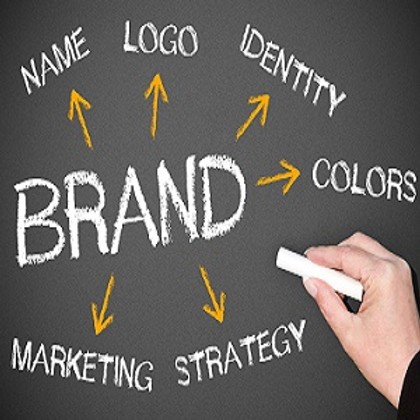
What is a brand? If you are asked that question, how do you respond? Do you describe a logo and designated colours? Maybe you talk about it in terms of descriptive adjectives, similar to how you’d describe a friend or trusted colleague? Or maybe you reply with the purpose of that particular brand?
Large multinational businesses spend millions on developing a brands values, and personality, they are hoping that you describe a brand in terms of descriptive adjectives. Did you know Coke brand values is happiness?
Branding as a verb.
Is this the ultimate measurement of the success of a brand in terms of awareness?
You don’t search the internet, you google it.
You fedex your packages, instead of shipping them.
You xerox your notes, versus making photocopies.
You photoshop an image rather than edit the image.
You hoover your home rather than vacuuming.
You make an announcement over the tannoy rather than the PA system.
I am sure you can come up with loads of your own.
Successful companies create successful brands, and never the other way around. Unless you count buying a brand.
However, look at Apple it’s the most valuable brand in the world, but we don’t use “Apple” as a verb. The same is true with Amazon, Facebook, and Disney. These companies are wildly successful household names, but we don’t use their brand names as verbs. Why?
Why do companies use brands and branding?
Branding is absolutely critical to a business because of the overall impact it makes on a target audience. Branding can change how people percept your brand, it can drive new business and increase brand awareness, probably more important it keeps customers.
Companies are constantly sending you marketing communications to keep you engaged with their brand as they want you to look at them as if they have a personality.
Ultimately a brand aim is for you to need them not want them. I am sure we all know of teenagers who need a smart phone otherwise their life is not worth living.
What are your thoughts on branding? Does it work? Do we really make free will choices now or are we steered into a choice due to brand communications?