+1 250-855-2260
Contact us

Category: Uncategorized

  • Why Small Businesses Benefit from Monthly Marketing Support

    Why Small Businesses Benefit from Monthly Marketing Support

    For many small businesses, marketing does not stop because the owner does not care.

    It stops because the owner is busy.

    There are customers to serve, staff to support, quotes to send, invoices to chase, suppliers to manage, jobs to finish, and problems to solve. Marketing often becomes the thing that gets fitted in around everything else.

    That usually means it happens in bursts.

    A few social media posts go out when there is time. An email gets sent when there is something urgent to say. The website is updated when something feels out of date. The Google Business Profile gets attention when someone remembers.

    None of this is unusual. It is one of the most common marketing challenges small businesses face.

    The problem is that inconsistent marketing can make the business harder to find, harder to understand, and easier to forget.

    That is where monthly marketing support can help.

    Marketing often slips because there is no regular rhythm

    Most small business owners already know that marketing matters.

    They know they should probably be posting more consistently. They know their website could be clearer. They know their Google Business Profile should be kept active. They know emails can help them stay in touch with customers.

    Knowing this is not usually the issue.

    The issue is finding the time, deciding what matters most, and keeping the work moving when the day-to-day business gets busy.

    Without a regular process, marketing can quickly become reactive. Something gets posted because the business has gone quiet. An ad gets boosted because sales feel slow. A website page gets rewritten because someone noticed it looked old. An email goes out because there is a last-minute offer.

    Sometimes those actions are useful. But when marketing is always reactive, it can feel random.

    And random marketing is hard to measure, hard to improve, and hard to keep consistent.

    Doing more marketing is not always the answer

    When a business owner feels that marketing is not working, the first instinct is often to do more.

    More posts. More ads. More platforms. More offers. More content.

    But more activity is not always better.

    A small business does not need to be everywhere. It does not need to chase every trend. It does not need to copy what every competitor is doing.

    It needs marketing activity that supports the actual goals of the business.

    For one business, that might mean improving the website so potential customers better understand the service. For another, it might mean making the Google Business Profile more useful. For another, it could be staying in touch with past customers by email. For another, it may mean planning a simple campaign instead of posting without a clear purpose.

    The real question is not always, “What else can we do?”

    A better question is often:

    “What needs attention first?”

    That is where practical marketing support can make a difference.

    What monthly marketing support can help with

    Monthly marketing support gives the business a regular process for reviewing, planning, creating, and adjusting.

    It does not have to mean a large agency package. It does not have to mean hiring a full-time marketing employee. It does not have to mean handing over every decision.

    For many small businesses, monthly support is about having someone who can help keep the marketing organized, realistic, and moving in the right direction.

    Depending on the business, monthly support may include help with:

    • Marketing priorities and planning
    • Social media content
    • Google Business Profile updates
    • Email marketing
    • Website content and messaging
    • Local SEO guidance
    • PPC or boosted post review
    • Campaign planning
    • Monthly review and accountability

    The exact mix should depend on what the business needs most.

    A business that has an outdated website may need a different focus from a business that has a strong website but poor follow-up. A business with regular repeat customers may need more email marketing. A business that relies heavily on local search may need stronger Google Business Profile activity and clearer service pages.

    The value is not just in creating posts or emails.

    The value is in helping the business make better marketing decisions, stay more consistent, and use time and budget more sensibly.
    Why accountability matters

    Marketing is one of those areas that can easily slip to the bottom of the list.

    Not because it is unimportant, but because it rarely feels as urgent as the customer standing in front of you, the phone ringing, or the job that needs finishing today.

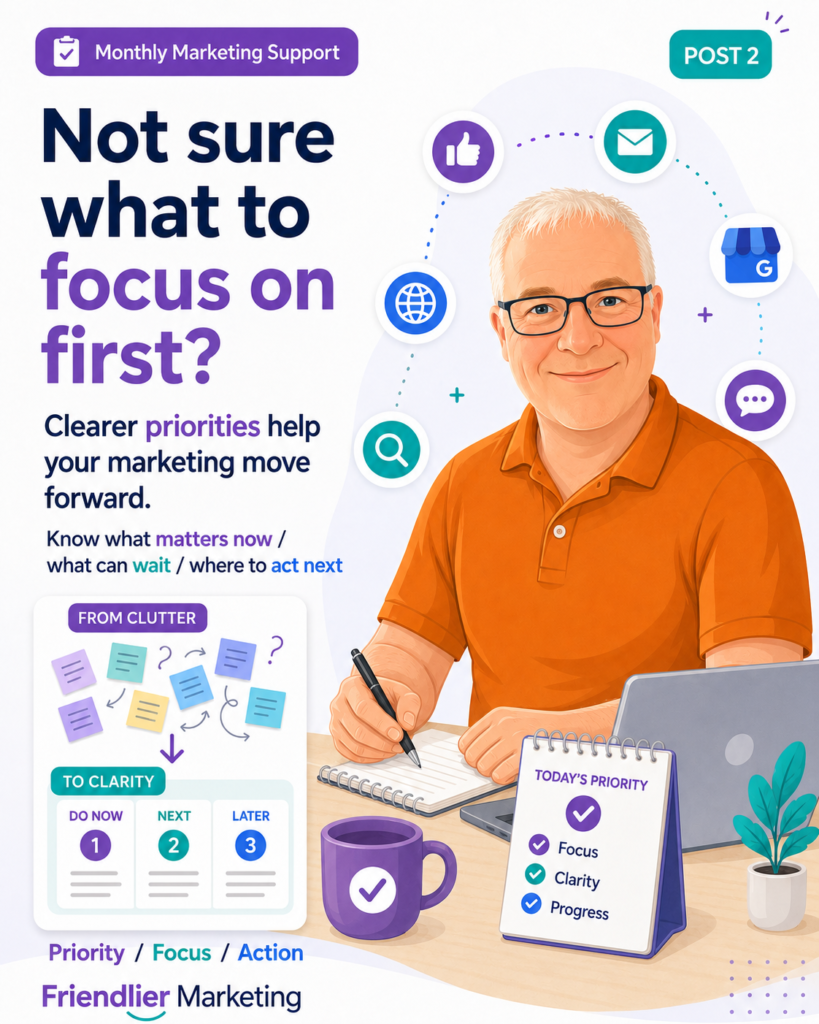
    A regular marketing check-in helps stop that from happening.

    Accountability means there is a process for looking at what has happened, what needs changing, and what should happen next.

    That might include asking:

    • What marketing activity happened this month?
    • What did not happen?
    • What needs attention now?
    • What can wait?
    • What is unclear to potential customers?
    • What needs to be updated?
    • What campaign or message should we focus on next?
    • Are we supporting visibility, credibility, and profitability?

    This kind of review does not need to be complicated. In fact, for most small businesses, it should not be.

    The goal is to create a practical rhythm:

    Review. Adjust. Plan. Act.

    When that rhythm is in place, marketing becomes less about panic and more about progress.

    Why monthly support can be more practical than hiring

    Hiring a full-time marketing employee is not realistic for every small business.

    For some businesses, it may not be affordable. For others, there may not be enough work to justify the role. Some owners may also not want the added responsibility of managing another employee, especially if they are not sure what marketing tasks should be prioritized in the first place.

    Monthly support can be a more practical middle ground.

    It gives the business access to marketing advice, planning, content support, and accountability without immediately committing to a full-time hire.

    This can be especially useful for businesses that need consistent help but still want to stay closely involved in decisions.

    The business owner still brings the industry knowledge. They know the customers, the service, the team, the pricing, and the day-to-day realities of the business.

    The marketing support helps turn that knowledge into clearer messaging, more consistent activity, and better follow-through.

    What monthly marketing support does not do

    It is important to be honest about this.

    Monthly marketing support does not guarantee sales, leads, rankings, reviews, or profit.

    No marketing consultant should promise that.

    There are too many factors involved, including the offer, pricing, competition, customer service, follow-up, market conditions, reputation, capacity, and the quality of the product or service being promoted.

    Marketing can support the business. It can improve consistency. It can make the business easier to understand. It can help build visibility and credibility over time. It can give campaigns a stronger foundation.

    But the business still needs to answer enquiries, deliver well, follow up properly, honour its promises, and make sound decisions.

    Good marketing support should not pretend otherwise.

    Signs your business may benefit from monthly marketing support

    Monthly support may be worth considering if:

    • Your marketing happens in bursts, then stops
    • You are not sure what to prioritize
    • Your website, social media, email, and Google Business Profile feel disconnected
    • You keep meaning to send emails but rarely do
    • You post on social media only when you remember
    • You are spending money on ads without being sure the message or landing page is strong enough
    • You have lots of ideas but no clear plan
    • You want honest advice, not marketing jargon
    • You need someone to help you stay accountable

    These are common problems for small businesses.

    They are also fixable with a better process.

    A simple monthly marketing rhythm

    A useful monthly rhythm does not need to be complicated.

    It could look like this:

    1. Review

    Look at what happened last month. What went out? What was missed? What worked well? What needs attention?

    2. Adjust

    Update the plan based on what is happening in the business. Has the priority changed? Is there a seasonal opportunity? Is there a service that needs more visibility?

    3. Plan

    Decide what content, email, website updates, Google Business Profile activity, or campaign work should happen next.

    4. Act

    Create, schedule, publish, update, test, and follow through.

    That rhythm is simple, but it can make a big difference because it gives marketing a place in the calendar rather than leaving it to chance.

    The aim is better consistency, not more noise

    Small business marketing does not need to be loud, complicated, or constant.

    It needs to be clear, useful, and consistent enough that people can understand what you do, why it matters, and how to take the next step.

    Monthly support helps create that consistency.

    It gives the business a practical way to keep moving, even when the owner is busy.

    And for many small businesses, that is the real value: not just more marketing, but better-organized marketing that supports the business.

    Need help keeping your marketing moving?

    Friendlier Marketing provides practical monthly marketing support for small businesses in Nanaimo and Vancouver Island.

    Support can include planning, content, social media, email marketing, Google Business Profile activity, SEO guidance, PPC review, campaign planning, and accountability.

    The goal is simple: clearer priorities, more consistent marketing activity, and practical support that helps you keep moving.

    Learn more about Monthly Marketing Support or contact Friendlier Marketing to ask what this could look like for your business.

    Paul Friend
    Friendlier Marketing
  • Hoedown Excavating Old Skool

    Hoedown Old Skool
    EXCAVATING ARCADE
    1UP
    000000
    FUEL

    🚜
    ⛽

    PRESS START
  • What is the difference between Tartan and Plaid.

    What is the difference between Tartan and Plaid.

    The terms “plaid” and “tartan” are often used interchangeably, but they have distinct meanings rooted in history, culture, and geography. Understanding the difference between the two requires exploring their origins, usage, and cultural significance, particularly in the context of Scottish heritage. This discussion will also consider how these patterns have evolved over time and how they are perceived and used in contemporary contexts.

    Definitions and Origins

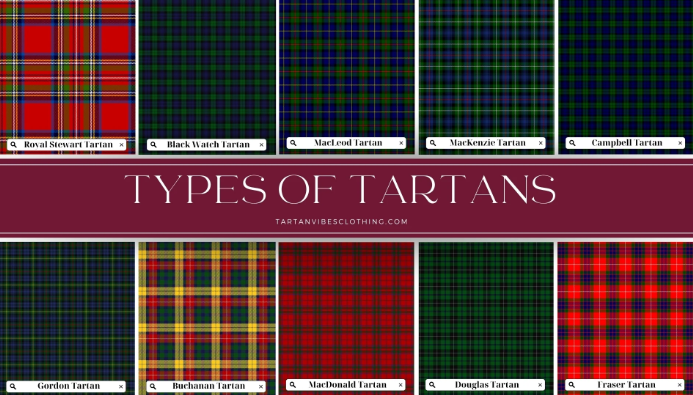
    Tartan refers specifically to a pattern of crisscrossed horizontal and vertical bands in multiple colors, woven into cloth. Traditionally associated with Scotland, tartans are created by weaving colored threads in a warp and weft pattern, producing distinctive checks. Each tartan design, known as a “sett,” is unique and often carries symbolic significance, representing specific clans, families, regions, or institutions. Tartans are registered and cataloged in various tartan registries, with the Scottish Register of Tartans being the most notable modern repository.

    Plaid, on the other hand, originates from the Gaelic word “plaide,” which means blanket. Historically, in Scotland, a plaid was a large piece of fabric, often tartan-patterned, worn as a cloak or draped over the shoulder. The Great Plaid (or “Feileadh Mòr” in Gaelic) was a long, versatile garment that could be used as both clothing and bedding. Over time, especially in North America, “plaid” came to refer to any fabric or garment with a checked pattern, regardless of whether it was authentically tartan.

    Historical Context

    Tartan in Scottish History

    Tartan’s history is deeply intertwined with Scotland’s cultural and political identity. Archaeological evidence suggests that checked patterns were used in textiles as early as the Bronze Age, though these early examples were not associated with clans. The earliest known tartan in Scotland, the “Falkirk Tartan,” dates to the 3rd century AD. This simple pattern of natural and brown wool was discovered in a Roman-era site and provides evidence of woven checked fabrics in early Scottish society.

    By the 16th and 17th centuries, tartan had become a significant part of Highland dress. Specific patterns began to be associated with certain regions or groups, but it wasn’t until the 18th century that tartan became closely linked with Scottish clans. This association was formalized during the rise of tartan’s popularity in Highland regiments, where tartan kilts became a key part of military uniforms.

    The Jacobite uprisings of the 18th century further solidified tartan’s cultural symbolism. After the Battle of Culloden in 1746, the British government passed the Dress Act, which banned the wearing of tartan and other traditional Highland attire in an attempt to suppress Highland culture and prevent rebellion. This prohibition lasted until 1782, after which tartan experienced a resurgence, fueled by romanticized notions of Scottish identity.

    The 19th century saw a tartan revival, popularized by King George IV’s visit to Scotland in 1822 and Queen Victoria’s fondness for Balmoral Castle. During this period, tartans were systematically cataloged and associated with specific clans, solidifying the modern concept of tartan as a marker of heritage and lineage.

    Plaid in Historical Use

    While tartan has a clear Scottish origin, “plaid” originally referred to the garment rather than the pattern. In Highland Scotland, a plaid was a practical piece of clothing, serving as a shawl or blanket to protect against the harsh climate. The Great Plaid, a precursor to the modern kilt, was a large length of tartan fabric that could be pleated and belted around the waist while the rest was draped over the shoulder.

    When Scottish emigrants brought their traditions to North America, the term “plaid” began to evolve. English-speaking settlers used “plaid” to describe the patterns they associated with Scottish textiles. Over time, in North American English, “plaid” became synonymous with any checked or tartan-like pattern, regardless of its cultural origins.

    Cultural Significance

    Tartan as a Symbol of Identity

    Tartan’s role in Scottish identity is unparalleled. Each tartan design can represent a clan, family, or region, creating a tangible link to ancestry and heritage. Clan tartans, though largely a 19th-century invention, are now deeply ingrained in Scottish culture. Tartan is also used by institutions, military units, and even corporations, further broadening its symbolic reach.

    In modern times, tartan is celebrated during events such as Tartan Day, observed annually on April 6 to honor Scottish heritage. The use of tartan in formal Scottish attire, such as kilts and sashes, continues to be a powerful expression of cultural pride.

    Plaid in Global Fashion

    Plaid, as it is understood outside Scotland, has a more universal and less culturally specific connotation. It has become a staple in global fashion, often associated with casual or rustic styles. The versatility of plaid patterns has made them popular in garments ranging from flannel shirts to scarves and skirts. Plaid patterns can be found in textiles worldwide, with variations influenced by local weaving traditions.

    The adoption of plaid by various subcultures, such as grunge in the 1990s, has further cemented its place in contemporary fashion. Unlike tartan, plaid lacks the strict rules and associations of heritage, making it a more flexible and accessible design element.

    Key Differences

    1. Cultural and Historical Roots:
      • Tartan is inherently Scottish, tied to clans, regions, and national identity.
      • Plaid, while originally Scottish, has evolved into a general term for checked patterns in North American and global usage.
    2. Symbolism:
      • Tartan carries deep symbolic meaning, often representing lineage and heritage.
      • Plaid is primarily a decorative pattern with no intrinsic cultural associations.
    3. Formal Recognition:
      • Tartan designs are often registered and cataloged, with specific rules governing their use.
      • Plaid patterns are not subject to such formalities and are freely created and adapted.
    4. Usage in Clothing:
      • Tartan is traditionally used in kilts, sashes, and other formal Scottish attire.
      • Plaid is more commonly seen in everyday wear, such as flannel shirts and blankets.

    Modern Interpretations

    In contemporary design and fashion, the distinction between tartan and plaid is often blurred. High-end designers and fast-fashion brands alike incorporate tartan-inspired patterns into their collections, sometimes without regard to their cultural significance. This appropriation has sparked discussions about the importance of respecting the origins and meanings of traditional designs.

    Despite this, tartan remains a proud symbol of Scottish heritage, celebrated at events like Highland Games and worn during special occasions. Plaid, meanwhile, continues to enjoy widespread popularity as a versatile and timeless pattern.

    Conclusion

    The difference between plaid and tartan lies in their origins, meanings, and cultural significance. Tartan, with its roots in Scottish history, represents a unique and powerful symbol of identity, heritage, and tradition. Plaid, while initially connected to Scottish garments, has evolved into a more general term for checked patterns in the global lexicon. Understanding these distinctions not only honors the cultural legacy of tartan but also highlights the ways in which patterns and textiles can transcend their origins to become part of a shared global aesthetic. By respecting and appreciating these differences, we can celebrate the rich history and versatility of both tartan and plaid in modern society.

  • The Basics of Brand Positioning for Small Businesses

    The Basics of Brand Positioning for Small Businesses

    The Basics of Brand Positioning for Small Businesses

    For a new business owner, the world of marketing might seem daunting. Terms like ‘brand positioning’ could feel distant, reserved for big corporations with deep pockets. But in reality, brand positioning is equally, if not more, crucial for small businesses. Let’s break down this essential concept and discuss its significance.

    What is Brand Positioning?

    Brand positioning refers to the unique space your brand occupies in the minds of your customers. It’s how you differentiate your product or service from that of your competitors. Think about it: in a world flooded with options, why should someone choose you? The answer lies in effective brand positioning.

    The Components of Brand Positioning

    1. Target Audience: Understanding who you’re speaking to is fundamental. Your audience defines how you communicate. Are they millennials looking for sustainable solutions? Or retirees seeking reliability and simplicity?
    2. Unique Selling Proposition (USP): What makes your product or service stand out? It might be the quality, the price, the way it’s made, or something entirely unique.
    3. Brand Promise: This is the value or experience customers can expect every time they interact with your business.
    4. Brand Personality: If your brand were a person, what would they be like? Are they sophisticated and premium or fun and playful?
    5. Value Proposition: This goes beyond the features of your product. It’s about the benefits – the real, tangible value customers receive.

    Why is Brand Positioning Essential for Small Businesses?

    1. Clarifies Your Business Identity: Brand positioning solidifies your identity. You understand your strengths and the unique space you occupy in the market. This clarity streamlines other aspects of your business, from product development to customer service.
    2. Facilitates Targeted Marketing: Knowing your positioning aids in targeted advertising. You know whom to target, where they hang out, and what messaging resonates with them. This means efficient use of marketing dollars, which is crucial for small businesses.
    3. Sets You Apart From Competitors: The marketplace is crowded. Through brand positioning, you can highlight what makes you different (and better) than the alternatives.
    4. Creates Emotional Connections: Businesses that stand for something – that have a unique voice and position – tend to create more profound emotional connections with customers. These connections can foster loyalty and lead to repeat business.

    The Positives of Undertaking a Branding Positioning Exercise

    1. Focused Strategy: Instead of trying to be everything to everyone, you’ll have a clear roadmap. Your strategies, whether they are for product development, marketing, or sales, will be aligned with your brand’s core position.
    2. Increased Customer Loyalty: Customers resonate with brands they can relate to. When you position your brand correctly, you become more than just a business; you become a part of your customers’ lives.
    3. Optimal Resource Allocation: Small businesses often work with limited resources. A well-defined brand position ensures that you’re not wasting time and money on efforts that don’t align with your core brand message.
    4. Higher Perceived Value: Effective brand positioning can allow you to charge a premium. When customers perceive added value in your brand, they’re often willing to pay more.
    5. Cultivates Brand Ambassadors: A strong, unique brand positioning can lead to passionate customers who become brand advocates, voluntarily promoting and vouching for your business.

    In conclusion, brand positioning isn’t a luxury reserved for big corporations. It’s an essential tool in the small business owner’s toolkit. By understanding and leveraging your unique position in the market, you can ensure your business not only survives but thrives in today’s competitive landscape. Embrace the process of defining your brand’s position; the rewards are well worth the effort!

    Still unsure if you can successfully carry out your own brand positioning exercise, read this 8-Step Process to Undertake a Branding Positioning Exercise. If then still unsure reach out for support.

  • 12 Essential Digital Marketing Tactics for Small Businesses

    12 Essential Digital Marketing Tactics for Small Businesses in 2023

    Digital Marketing is a game-changer for small businesses.

    With the right strategies, it allows you to compete effectively with larger firms, build a global audience, and foster a closer relationship with your customers. The big question is, how can small businesses make the most of digital marketing? Below, we outline 12 essential tactics to consider in your digital marketing plan.

    Set Clear Marketing Goals
    First things first, define what you want to achieve with digital marketing. Are you looking to increase brand awareness, boost sales, or perhaps improve customer loyalty? Clear goals will guide your strategies and allow you to measure your progress effectively.

    Know Your Audience
    To engage your audience effectively, you need to understand their interests, pain points, and how they like to consume content. Customer surveys, social media insights, and Google Analytics are just some tools you can use to understand your audience better.

    Optimize Your Website for SEO
    Search Engine Optimization (SEO) is the process of improving your website so that it ranks higher on search engine result pages. This boosts organic traffic, making it easier for potential customers to find you. Consider on-page SEO tactics like optimizing your website content and internal links, as well as off-page strategies like building high-quality backlinks and increasing traffic flow.

    Leverage Content Marketing
    Content marketing involves creating and sharing valuable content that attracts, informs, and engages your audience. This could be blog posts, eBooks, infographics, or videos. A strong content marketing strategy can boost your SEO, generate leads, and establish your brand as an industry authority.

    Invest in Email Marketing
    Despite being one of the oldest digital marketing tactics, email marketing remains extremely highly effective. Collect emails from visitors to your website and nurture these leads with regular, value-rich content. Personalization and automation can significantly enhance your email marketing campaigns.

    Utilize Social Media Marketing
    Today, social media is a powerful tool for building brand awareness, promoting products, and interacting with your customers. Choose platforms that align with your target audience, and share engaging, relevant content regularly. Live videos, stories, and user-generated content can significantly enhance your social media strategy.

    Implement Pay-Per-Click Advertising
    Pay-Per-Click (PPC) advertising, like Google Ads, can provide a significant boost to your online visibility. You only pay when someone clicks on your ad, making this an effective and budget-friendly marketing tactic. However, research the cost-effectiveness of this against your cost of sale profitability.

    Engage in Local SEO
    For businesses that serve specific geographic areas, local SEO is essential. Make sure your business is listed in online directories, and optimize your website for local search terms. Also, encourage satisfied customers to leave reviews on Google and other review platforms to boost your local credibility.

    Leverage Influencer Marketing
    By partnering with influencers or networking partners in your niche, you can reach a broader audience. Micro-influencers, although they have fewer followers, often have a more engaged audience, making them a cost-effective option for small businesses.

    Harness the Power of Video Marketing
    Youtube is still one of the most searched platforms and of course, is owned by Google. Video content is highly engaging and favored by algorithms on platforms like Facebook and Instagram. Consider creating product demos, tutorials, behind-the-scenes videos, and customer testimonials to connect with your audience.

    Optimize for Mobile
    More than half of all internet traffic comes from mobile devices. Ensure your website is mobile-friendly, and consider using mobile-specific tactics like SMS marketing and mobile apps.

    Monitor and Adjust Your Strategies
    Lastly, digital marketing as with all marketing is not a set-it-and-forget-it endeavor. Use tools like Google Analytics to monitor your campaigns’ performance and adjust your strategies as needed.

    Digital marketing can seem overwhelming, but breaking it down into manageable tactics. will ensure that it is contributing to the sustained success of your business.

    Still unsure, then reach out for an initial free digital marketing consultation.

  • How a small Service Busines Might Use AI.

    Website & local SEO helper

    The business could enter a specific prompt into ChatGPT with the business URL and review the answer to help with onsite SEO. Always check the results, as if the prompt is too generic, it can produce very inaccurate data.

    An example of an on-site SEO prompt. (insert url) provides the following services (insert a list of key services). Review their website and make content recommendations for changes to pages, additional pages, and blog topics.


    Google Review, Social Media Reviews.

    If you struggle to find the right words for a review, or want advice on how to have a conversation in reviews. You can ask ChatGPT:

    Write a warm, professional reply to this 5-star review. Mention our focus on quality craftsmanship and communication. Review: (insert review). Check, tweet, then copy and paste.


    Social Media.

    For example, a tradesperson can take before and after jobs, with a very basic explanation, and AI can turn that into reel, caption and call to action suggestions. All in seconds.

    AI can now create scroll-stopping graphics and videos to help your profiles gain traction.

    AI can write a whole month of social media ideas in seconds. Remember to make the prompt very specific to your objectives.


    Turning rough notes into professional quotes.

    If a small business is not using a quoting platform and needs to create polished quotes as a PDF or other format. ChatGPT can take the rough notes and images and produce polished notes. A quick tip if you save the chat as quotes, it will learn and always produce a similar tone and style for all your quotes.

    An example could be “Convert these notes into a professional quote description for a homeowner: [paste notes]. Use plain language and keep it under 250 words.”


    Email templates & follow-ups

    AI can create a library of reusable email templates:

    “Thanks for your inquiry, here are the next steps…”

    “Here’s your quote, let me know if you have questions.”

    “Just checking in on the quote we sent last week.”

    “Thanks for choosing us – here’s how to care for your new [door/paint/etc.].”

    The business only needs to:

    Draft a very rough email once.

    Ask AI: “Please turn this into a clear, friendly template I can reuse.”

    Save it in his email client as canned responses.


    Job intake summaries

    If the business receives enquiries via email or other written mediums, such as social media or text. A business can use AI to summarise the key elements

    Here is a potential scenario.

    A customer sends in this request.

    Hi
    I found you on Google and then asked a few friends if you were a reputable company. I then looked for you on social medi,a and your posts really gave me a good feeling about you and your company.
    I have been putting of the work for ages now and after several starts realized that the job has probably become way to be for me to do on my own.
    My wife is giving me grief about not getting the repairs done.
    We live in a rancher style home. The decking has not be replaced for over 30 years and is starting to sag in places. Would you be able to come to our home and give us a quote to remove the decking and replace it with a smaller one.
    We no longer need the space as all the family is now grown up and moved out.
    The youngest moved out two years ago and is now in Toronto studying to be a lawyer.
    We do have a few pets. Are you comfortable working around pets?
    Actually, now i think about it. Our back door has not closed properly for years. Is this something you could take care of.
    We are on a limited budget so any ideas you have to make this not too much money would be amazing.

    I hope to hear back from you soon before my wife divorces me.

    Simply enter this prompt into your preferred AI app such as ChatGPT. “Summarise this into a job ticket with key tasks and questions I should ask on my site visit and provide a summarized response to the client.”

    Hi [Client Name],

    Thanks for reaching out—and for the kind words about our reviews and social posts. I’d be happy to help get this off your plate.

    Here’s what we’ll take care of:

    Inspect the existing deck (30+ years old), confirm structural issues, and plan safe removal.

    Design and quote a smaller replacement deck that fits your current needs.

    Value-engineer materials and details to suit a limited budget (we’ll show good/better/best options).

    Diagnose and repair or replace the back door so it closes and seals properly.

    Work safely around pets and keep the site tidy each day.

    Next step: I can stop by for a quick site visit to measure up and finalise options. Do any of these times work for you this week: [Day/Time], [Day/Time], or [Day/Time]? If you have a rough budget range in mind, feel free to share so I can tailor the options.

    Appreciate the chance to help—your deck and door are about to stop being a headache (and keep everyone happily married!).

    Best,
    [Your Name]
    [Company] | [Phone] | [Email] | [Website]

    Click here to see the job card that was created.


    These are just a couple of basic ideas that require very little knowledge of AI.

    Unsure how to expand the use of Artificial Intelligence for your business? Book a free 30-minute AI consultation with Paul Friend of Friendlier Marketing.

  • How to Thank Your Clients This Christmas

    How to Thank Your Clients This Christmas

    As the Christmas and festive holidays, fast approach and the end of another calendar year come into view, if you have not already done so, it’s time to start thinking about how to thank your client this holiday season.

    The most popular way to do this is by sending clients a heartfelt Christmas message or a suitable client gift.

    It is important to put thought and consideration into any potential messages and gifts. Consider the public relations consequences of your actions. However, no action is not an option.

    Why is thanking clients at Christmas so important?

    • It creates a positive association with your brand and business values, making customers less likely to switch to a competitor, even when you hit their price point for potentially switching – Forbes research found that 43% of companies believed gift giving brought a substantial benefit to increasing customer loyalty.
       
    • It helps to build a relationship between you and your clients – one survey found that 63% of companies attributed better customer relationships to gift-giving.
       
    • It leaves a memorable and lasting impression – 66% of gift receivers can recall a brand name on a received promotional item after 1 year. It may offset the odd time we are all human and make a mistake.
       
    • It promotes goodwill and very often leads to increased client recommendations. When you consider the power of reviews and recommendations in modern marketing, this element alone is worth the time and effort.

    How do you say thank you to your clients this Christmas?

    Here are our top suggestions:

    1. Send Christmas cards with thank you messages to clients

    In the modern world of digital, standing out from the crowds and ensuring your message is received and read, it might be time to go old school. Sending a thank you message to customers at Christmas via post is a personal and meaningful way to show your appreciation, more so than via email.

    By sending a bespoke Christmas thank you card with your business’ design you’ll be able to increase brand awareness whilst also making your client feel valued.

    Make sure to include a personal message thanking them for their business.

    What should you say in your client’s Christmas card messages?

    • Be clear about why you’re thanking them – this could be for their continued loyal, service, the pleasure of working with them over the last 12 months, or welcoming them on board
       
    • Make it personal yet professional – don’t use the message to promote your service, instead use it to promote a positive working relationship. There will be plenty of time in the new year to remind your customers of your services old and new.
       
    • Encourage all of your colleagues who work with the client to sign the card. If this is not possible you could scan signatures and have them printed into the cards. A better alternative to doing nothing.
       
    • Need some inspiration for your client’s Christmas message? Here are some ideas to get you started:
      • “Happy holidays to all at [client name]. Thank you for your continued support.”
         
      • “Sending Christmas greetings from our entire staff. Thank you for your ongoing support. We’re looking forward to serving you in earnest over the next year.”
         
      • “Best wishes for the season of joy. Thank you for trusting us with your [relevant service] needs.”
         
      • “It’s customers like you that make our job so enjoyable. Merry Christmas to all and best wishes for the year ahead.”

    When do you send the card? If it has a Christmas message then give yourself plenty of time to ensure they receive your thanks. An alternative is to wait until the hectic festive period is over and send them a thank you message between Christmas & New Year (ensure you use the correct tense), this might increase the engagement and attention your customer gives to your message. Consider how many messages they are being bombarded with leading up to Christmas.

    2. Send them client gifts for Christmas

    Sending clients Christmas gifts is a great way to thank your customers and boost your working relationship.

    In fact, 94% of top business executives believe that client gifting can impact a business relationship.

    When sending Christmas thank-you presents to clients, there are a few things to consider:

    • Your budget – how much are you willing to spend per client? Remember, it isn’t necessarily all about how much you spend on a client, but rather the sentiment of the gift
       
    • Does your client’s spending threshold with you qualify them for a gift? Consider different size gifts for different client spends. However, be aware that clients may talk to each other.
       
    • Will your gift align with their individual or company values? A client following a vegan diet may not appreciate a cheese selection
       
    • How will you make it personal? It’s popular to include a gift card or Christmas client message alongside a gift
       

    Not sure what to send? Here are some ideas:

    • A bottle of wine or bubbly
       
    • Personalized stationery with your company’s details – for example, a custom notebook
       
    • If you sell a physical product, you could send one or a selection of these as a gift for their team to enjoy
       
    • A Christmas food basket
       

    Check with your bookkeeper and account to identify how to write off Christmas Gifts.

    3. Take them out for a festive lunch or invite them to an event

    For clients with a higher annual spend or those that are important to the business, you may consider inviting them to a festive lunch or an event.

    This is a brilliant opportunity to thank them for their business whilst engaging them in conversation, asking them about their experience with your business over the last 12 months, and solidifying your partnership for the following year.

    This gives them a further positive association with you and the company itself.

    You could also look at holding a festive event or dinner for prestigious clients, giving an opportunity for everyone to come together for an evening of fun to celebrate the year gone.

     4. Make a donation in their name

    Embrace the true spirit of Christmas by giving to a cause that you believe in, or one that is important to your client.

    By doing so in their name and selecting a charity aligned with their vision and values, you’re showing that you appreciate and understand their business and see them as valued client.

    This will likely build rapport between you and your client and may encourage further business in the future.

    5. Post about them on social media

    A positive social media presence can do wonders for the image of your company which can encourage prospective clients and even jobseekers to consider making contact with you.

    By posting about them, you’re making an effort to publicly show your appreciation to them, which can benefit your working relationship and in turn, by giving them a spotlight, your post could be sending more traffic to their website and giving them more customers. This shows that you value their success.

    Not sure what to post? This could be a simple thank you post, a photo of a meeting, or a resharing of one of their posts. But don’t forget to tag them!

    Finally, whilst you’re looking for client Christmas gift ideas, it may be time to start planning your corporate Christmas gifts for employees too.

    After all, 80% of companies have reported improved relationships with their employees or clients following gift-giving.

  • 5 top tips to get your content marketing to go viral on social media.

    When it comes to increases your business brand awareness, one of the most cost-effective methods is to create content that has the potential to go viral. But how do you create viral content? There are numerous parameters to consider however to have any chance of truly going viral, the key is to create content that will evoke an emotional reaction.

    “Going viral” is now a common expression we all know.

    Viral content comes with numerous benefits, starting with improved visibility, referrals, ultimately more traffic, and hopefully (if you’re setting up your website right), more conversions.

    When content spreads quickly and gets a lot of views, it can take on a mind of its own and may become uncontrollable so bear this in mind.

    We have looked at some common factors that cause content to go viral and want to share the following with you.

    It is a lofty goal, but let’s tell the story of how posts go viral, in hopes that you can make some of your own social content go viral as well:

    Invoke Emotions and People engage and react.

    One feature almost all viral posts share is the ability to provoke and capture people’s emotions. Humans by nature are emotional and when our emotions become highly aroused, we want to share that item with others. Entrepreneur  discussed a study conducted by The University of Pennsylvania. The researchers discussed features that make some content go viral faster than others.

    Below are some highlights on their research about viral content and emotional arousal. Generally, positive content is more likely to go viral than negative content; however, it is a little more complicated than that:

    • Content that evokes high arousal of positive emotions (for example, the feeling of “awe”) or high arousal of negative emotions (for example anger or anxiety) emotions is more likely to go viral.
    • Conversely, content that evokes low arousal, or what the research team calls “deactivating,” emotions (such as sadness) is less likely to go viral.

    What does this mean?

    Ultimately, it is important to reach out and touch people’s emotions. However, it is important that you are provoking the correct type of emotions. Go for high arousal positive emotions first and foremost. If it is absolutely necessary to your campaign, you can also attempt to appeal to high-arousal negative emotions.

    Seven emotions that make content spread like wild-fire.

    According to Social Triggers, this research by Jonah Berger and Katy Milkman from the University of Pennsylvania also says there are seven emotions that you can target in order to appeal to the high arousal emotions which are more likely to make content go viral.

    I found it useful to split these seven emotions into the positive high arousal and negative high arousal categories, because as you recall, positive content trumps negative content in going viral; however appealing to high-arousal type emotions trumps low-arousal.

    For this reason, you can look at the first category as your goal in content creation, and if the situation warrants, and you can look to the second category for some inspiration as well.

    Positive High-Arousal

    Amazement: What makes people pay attention—happiness, glee, or excitement? Ultimately, do they connect in some way to the content? If people are saying or feeling “awe” because of the content you publish, they are more likely to like, share, and talk about your content.

    The Justin Emily Wedding Proposal that went viral is a great case. People felt so touched and just absolutely crazy for Justin’s elaborate film proposal.

    Joy: Similarly, joy is about people feeling happy when they see a piece of content on social media. If content is positive and uplifting, if people smile or laugh, they are going to be a lot more inclined to share.

    Lust: This has to be one of marketing’s greatest tools. Lust stretches far beyond popular sexual definitions of the term. Lust is better defined as “being consumed with desire”.  This could be anything from shoes to sports clothing or fitness goals. If you know how to inspire people and get them to lust for your product, you are sure to have an in.

    Positive/Negative Arousal

    Surprise: Surprise is a particularly high-arousal emotion. It can also, in my opinion, be treated as a positive or negative means to gaining attention. When people are taken back by a piece of content in one way or another, they want to share that element of surprise they experienced.

    Negative High-Arousal

    Anger: One way to really grab attention is to evoke anger or capitalize on anger your audience is already experiencing about a certain topic. These can often go hand in hand with social movements and protest of issues directly impacting society at large. They are often linked to current events.

    Anxiety: Honestly, Social Triggers said it best when they said, “people hate anxiety.” That shared reaction to anxiety can definitely make content to contagious. One way to do this is by publishing content that stresses if people do not act quickly they may be missing out.

    Other Characteristics of Viral Social Posts

    Last in our story of how social posts go viral, I want to address a few other aspects of viral content besides triggering emotions. While you absolutely want to develop content that targets emotions, there are also some other essential things to consider:

    Make It Relatable
    You want to make sure any content you create is above all relatable. Sometimes just offering practical advice that most people relate to will do the trick, other times applying what we learned about emotions and trying to get a sense of how you want people to react can help in developing the content you want to be successful.

    Make It Easy to Read and Visually Appealing
    One reason people like list posts is because they are both easy to read and visually appealing. If you can create content that does both of these things successfully, you are much more likely to have content go viral.

    Use Catchy Titles and Powerful Introductions
    People know quickly if they want to read an article in full or watch an embedded video after reading the title. If they get past the title, reel them in with a powerful introduction. Master this, and your content will definitely stand out. But do not click bate, this will only harm future content marketing.

    Publishing and Promoting Strategies
    We all know there are “peak publishing hours” and other strategies to promoting content, for example, sharing on various other social outlets. Use these to your advantage, especially in the beginning of trying to get people to catch-on to the content you’re developed.

    Of course, with all of this there is one factor that complicates any content going viral. Humans are fickle and complex. You may find one person’s humour is another person’s anger. Make sure you have done your audience research prior to any content marketing strategy implementation.

    Have you had content go viral intentionally or otherwise? Would love to hear your story in the comments below.

    Would you like help identifying your customers and what evokes a reaction in them?

    Book Now Button
  • 10 Great Benefits of using a Marketing Consultant

    10 Great Benefits of using a Marketing Consultant

    Specialized Expertise

    Who would not want an expert in their team? A great marketing consultant will bring expertise from years of education and honing their skills. Marketing Consultants are sought out and valued by their clients because how many business owners know their industry inside and out and know all that is needed to know about marketing their business? Most do not have the time or the motivation to learn a whole new industry?   A great Marketing Consultants will have a broad range of expertise across all aspects of marketing, understanding the theories and principles that support marketing communications via mediums such as social media. They say knowledge is power, however, knowledge needs to remain current any good consultant will keep their knowledge current.  Consider the cost of hiring an employee with that level of expertise? This is why many businesses large and small outsource to marketing consultants.

    Experience

    Many marketing consultants will have years of experience, helping a wide variety of businesses within numerous industries. This knowledge is transferrable to your business and your marketing needs. Many hire interns or a junior member of staff to try and save money, by hiring an employee with little experience, it’s like paying someone to learn as they go, with your brand as the guinea pig.

    Objectivity

    From my experience of working within large enterprises, it is almost impossible for an employee to be objective. Too many factors like job security and impressing the boss come into play. Let’s face it, with anything in life it sometimes takes someone from the outside looking in to see what’s wrong. Your employees may have a vested interest in “what you’re doing now” because they do it and are being paid to do it. However, a transparent marketing and business consultant will give you the hard facts.  They will make justified recommendations on what needs to happen to grow your business and make it a success.  Enlisting the support of a Marketing Consultant is a great way to breathe new life into your marketing efforts and make sure you have a strategy that works, not just a process that happens because “that’s what we’ve always done”.

    Time, Cost Savings

    A Business and Marketing Consultant’s expertise can also save you money. As a business owner or Marketing Director, you are approached by salespeople all the time. Your unbiased Consultant is a trusted go-to person. Based on understanding your business, a Consultant can inform you of the true benefits of what that salesperson is trying to sell you. For example, you are a realtor and an SEO marketing expert tells you it is vital to be on page 1 position one on Google. However, the marketing consultant will help you analyze the cost-benefit of trying to beat the likes of Remax to number one.

    Productive

    According to various studies, it takes an employee over six months to reach optimum performance.  Business and Marketing Consultants with your industry knowledge are productive from the moment you instruct them. They do not need to learn your industry as they apply marketing principles to what you know about your business. As self-employed individuals, they are used to being self-starters and experts at jumping in and getting a job done without hand-holding. A good consultant will have tools at their disposal to be ready to go out of the gate. Through years of training and experience, a great business and marketing consultant will know what to ask you and how to support the sustainable growth of your business. They will also support you with your own accountability and help reduce procrastination.

    No HR Issues

    As an owner of a restaurant and as a general manager with Hilton, I fully understand how much time and money HR takes up, even with only one or two staff. A Consultant is not an employee, and therefore you are completely free of all the HR headaches, and costs, that come into play when you hire someone. This includes recruiting, turn-over, training and orientation, vacation coverage, payroll, sick time, stress leave, paper work, personal days, mat leave and continued education, just to name a few.

    No Overhead

    Every employee has what is often referred to as hidden costs. Do they need office space and associated equipment? Consider what is required to have your own marketing employee, laptop, printer, stationery, computer programs, etc? The ongoing training and staff development is another time and cost consideration of hiring an employee. Looking at the marketing industry, maintaining an employee’s knowledge requires around 30 hours of training a year, that’s almost a week of lost productivity in addition to the hard cost of that training. We as consultants undergo all that training without it impacting how we support you.

    Tax Deductions

    Like the salaries you pay your employees, the investment you make in a Consultant is a full tax deductable expense for your business. The GST you pay on this expense is an Input Tax Credit that you get back in the form of savings when your accountant files your GST.

    Efficiency

    Business and Marketing Consultants are ideal when an organization has a one-off marketing project, on a tight timeline. It needs to be executed quickly and efficiently. There is no time for a lengthy hiring and orientation process. An experienced Consultant will have completed many one of projects and understands that the project is time limited. Thus you avoid the obligations that can come with hiring an employee. We are your one point of contact and work you’re your creative, digital, social experts (or ours as required) to be time efficient and to ensure that your marketing efforts are integrated.

    Relationships

    Friendlier Organics has a cooperative approach and has built long-term relationships with past and current clients. We only work with businesses were a valued relationship can be established. There is no internal business politics to deal with as we are contracted to carry out a contract and not interested in progressing a career within your business. We have years of training, knowledge and expertise behind us, so we understand how to build a relationship with you. We are ourselves a small business and Paul has another business so fully understands the pressures, this makes building a relationship easier.

    Book an initial free consultation to see how we can support the growth of your business.